
Design Build vs Integrated Project Delivery
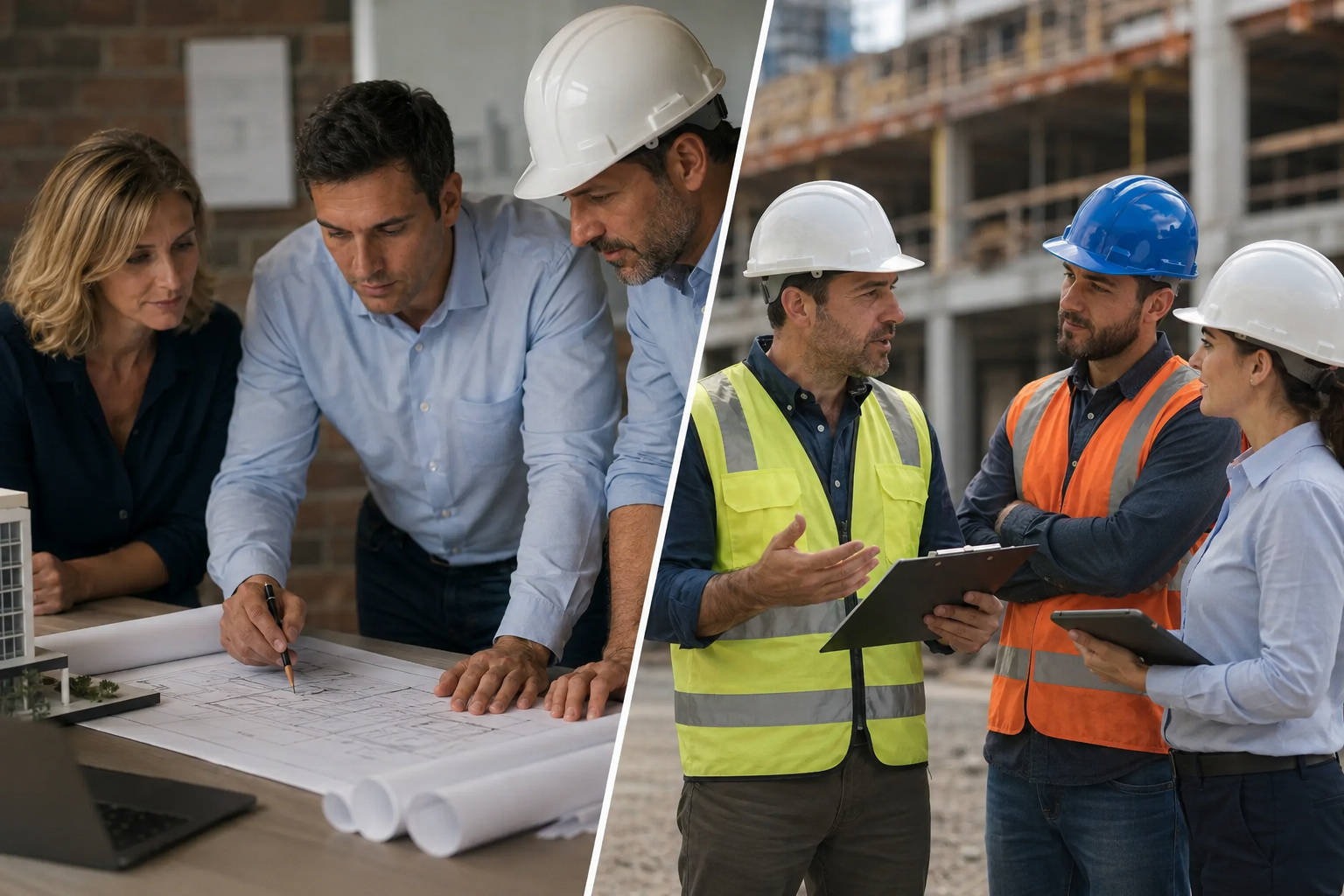
If you are comparing design build vs integrated project delivery, you are probably not looking for theory. You are trying to figure out which project model gives you better control, fewer delays, and a smoother path from concept to construction - especially on a high-value residential project where mistakes are expensive.
For most homeowners, the answer is less complicated than the industry makes it sound. Both models aim to reduce the handoff problems that happen in traditional design-bid-build. But they are not equal in how often they are used, how contracts are structured, or how practical they are for a custom home, major remodel, room addition, or ADU.
Design build vs integrated project delivery: the basic difference
Design-build puts one team in charge of both design and construction. That usually means one company or one coordinated entity manages planning, estimating, permitting, scheduling, and building. The homeowner has a single point of accountability.
Integrated project delivery, often called IPD, is a more formal collaboration model. The owner, designer, and builder enter into a shared agreement that aligns risk and reward across the group. Instead of each party protecting its own contract, the structure is meant to make everyone act as one team from the start.
That sounds similar to design-build, and in some ways it is. Both models try to improve communication and solve problems earlier. The real difference is in the level of contractual integration.
Design-build simplifies the homeowner experience by centralizing responsibility. IPD goes further by changing how the key parties share financial risk, decision-making, and incentives.
Why homeowners get confused by these terms
A lot of residential clients hear "integrated" and assume it means the same thing as a well-run design-build firm. That is understandable. In everyday language, both sound like one coordinated process.
In practice, IPD is much more common on large commercial, healthcare, or institutional projects where there are many stakeholders, significant technical complexity, and enough budget to justify a multi-party contract. It can work well in those environments because the job involves large teams and expensive coordination failures.
For residential construction, especially custom homes and major remodels, design-build is usually the more practical integrated model. It still gives you coordination between design and construction, but without the legal and administrative complexity that often comes with true IPD.
How design-build works in a residential setting
On a residential design-build project, the process is built around continuity. The same team helps shape the design with real construction input, then carries that work into permitting and construction.
That matters more than many homeowners realize. When the designer works in isolation, plans can look excellent on paper but create budget strain, permitting delays, or field conflicts. When construction expertise is part of the process early, decisions are made with pricing, buildability, and schedule in mind.
For a room addition, that might mean catching structural implications before drawings are finalized. For a teardown and rebuild, it could mean balancing site constraints, city requirements, and design goals at the same time. For a whole-home remodel, it often means sequencing the work in a way that reduces downtime and change orders.
The biggest advantage is accountability. If design and construction are under one roof, there is less room for finger-pointing when issues come up.
Where integrated project delivery stands apart
IPD is designed to create deep alignment among the owner, architect, and builder. Everyone is brought in early. Everyone has visibility into project goals. And everyone shares some level of upside or downside based on the outcome.
That can produce excellent results when the project is highly complex and the team is experienced with the model. It encourages transparency and collaborative problem-solving from day one.
But there is a trade-off. IPD asks the owner to enter a more sophisticated contract structure and often a more involved decision-making environment. It can require more legal setup, more process discipline, and a team that already knows how to work this way.
For an institutional client with internal project managers, legal counsel, and a long capital planning horizon, that may be a smart fit. For a homeowner trying to build an ADU or custom home while managing family and work, it is often more structure than they actually need.
Design build vs integrated project delivery on speed
If speed matters, both models beat the traditional sequence of hiring a designer first, finishing plans, bidding them out, and only then bringing in a contractor.
That said, residential design-build usually has the edge in practical speed. The reason is simple. It removes layers. You are not assembling a multi-party agreement or building a specialized IPD team around one home project. You are working with one integrated company that can move from concept to pricing to permitting to construction with fewer handoffs.
That kind of continuity is one reason firms like EDR Design Build emphasize a single-team approach. When communication, design coordination, permitting, and construction management are all aligned, projects can move faster because decisions are made in one system instead of across disconnected vendors.
IPD can also improve speed, but only when the team is set up correctly and the project is large enough to benefit from the additional structure.
Cost control and financial risk
Homeowners often assume IPD must offer better cost control because of the shared-risk model. Sometimes that is true. But the reality depends on project type and team experience.
In residential work, design-build often gives better day-to-day cost control because pricing conversations happen earlier and more often. As the design develops, the builder can steer decisions toward realistic budgets, material availability, and practical construction methods.
That does not mean every design-build firm manages cost well. The model works only when the builder is transparent and process-driven. But when it is done right, it reduces one of the biggest problems in residential construction: a design that outruns the budget.
IPD is built around aligned financial incentives, which can be powerful. Still, for a homeowner, the contract mechanics can feel distant from the actual question: Will this team keep my project financially disciplined? On a house, the answer often comes down less to the contract model and more to whether the team has a proven system for estimating, scope control, and change management.
Which model gives you more control?
Some homeowners worry that design-build gives the builder too much influence over design. That can happen if the company treats design as an afterthought. A strong residential design-build firm does the opposite. It protects design intent while making sure the project can actually be built on time and within budget.
IPD can give owners a strong voice because collaboration is built into the model. But more collaboration does not always mean a simpler experience. In residential projects, too many decision-makers can slow momentum unless roles are clearly managed.
For most homeowners, control is not about sitting in the middle of every technical discussion. It is about knowing the process is organized, the trade-offs are explained clearly, and the team is accountable for the outcome.
So which one makes more sense for your project?
If you are planning a custom home, major addition, ADU, or large-scale remodel, design-build is usually the stronger fit. It is easier to implement, better suited to residential workflows, and far more common among experienced full-service contractors.
If you are developing an unusually large or complex residential property with multiple consultants, advanced systems, and a team already comfortable with collaborative contracting, IPD may be worth discussing. But that is the exception, not the rule.
The better question is not whether a company uses the latest industry label. It is whether the process reduces fragmentation, aligns design with construction from the start, and gives you one clear path from planning to completion.
That is what most homeowners are really after. Less coordination burden. Fewer surprises. Better communication. A faster, more organized project.
When you are making a major investment in your home, the smartest choice is usually the model that turns complexity into clarity. For most residential projects, that means working with one team that can permit, design, and build with discipline from day one.
Proudly serving San Jose, Campbell, Los Gatos, Saratoga, Cupertino, Sunnyvale, Santa Clara, Mountain View, Los Altos, Los Altos Hills, Palo Alto, Menlo Park, Stanford, Woodside, Emerald Hills, Atherton, South San Francisco, Redwood City, Foster City, Portola Valley, Belmont, San Mateo, Burlingame, Millbrae, Hillsborough, San Bruno, Daly City, Colma, Brisbane, Pacifica, Milpitas, San Carlos, and surrounding Bay Area communities.
