Design-Build vs Traditional Remodeling: Which Is Right for Your Home?
Choosing the right remodeling approach is just as important as choosing the right finishes. When planning a renovation, many homeowners compare working with a design build firm versus hiring a designer and contractor separately. Understanding how each model works—and which aligns best with your goals—can help ensure a smoother, more successful project.
Whether you’re planning a kitchen remodel, full home renovation, or high-end upgrade, knowing the differences between design build vs traditional remodel sets clear expectations from the start.
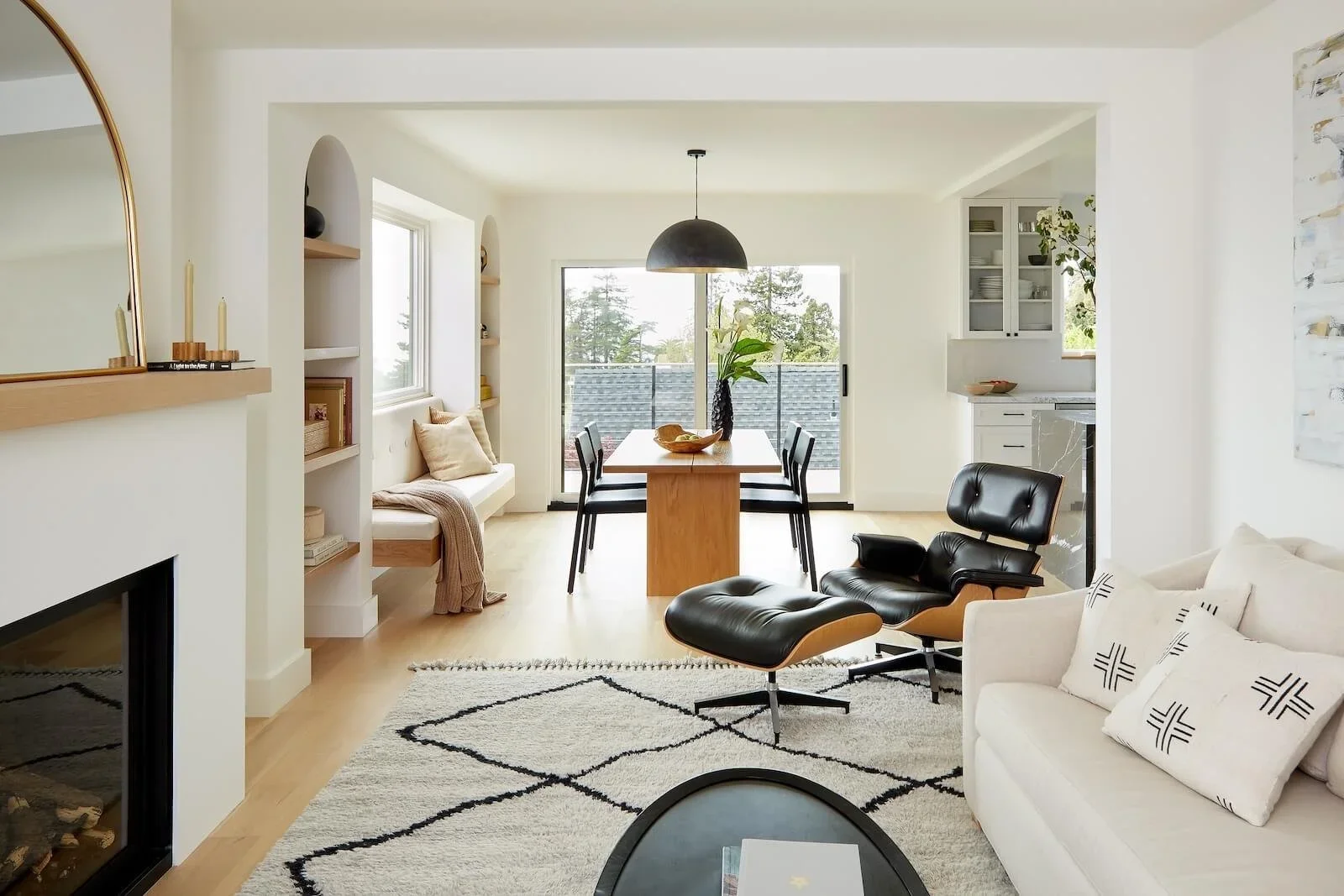
Bright open-concept living and dining area after a home remodel, featuring light wood floors, a modern fireplace, built-in shelving, minimalist furniture, and seamless flow into a contemporary kitchen.
What Is a Design Build Firm?
A design build firm handles both design and construction under one unified team. Instead of coordinating multiple vendors, homeowners work with a single design build contractor who manages the entire process—from concept through completion.
Key characteristics of design-build remodeling:
One contract, one point of responsibility
Collaborative design and construction planning
Early budget alignment during design
Streamlined communication and decision-making
This approach is especially popular for high end design build projects where coordination, precision, and efficiency are critical.
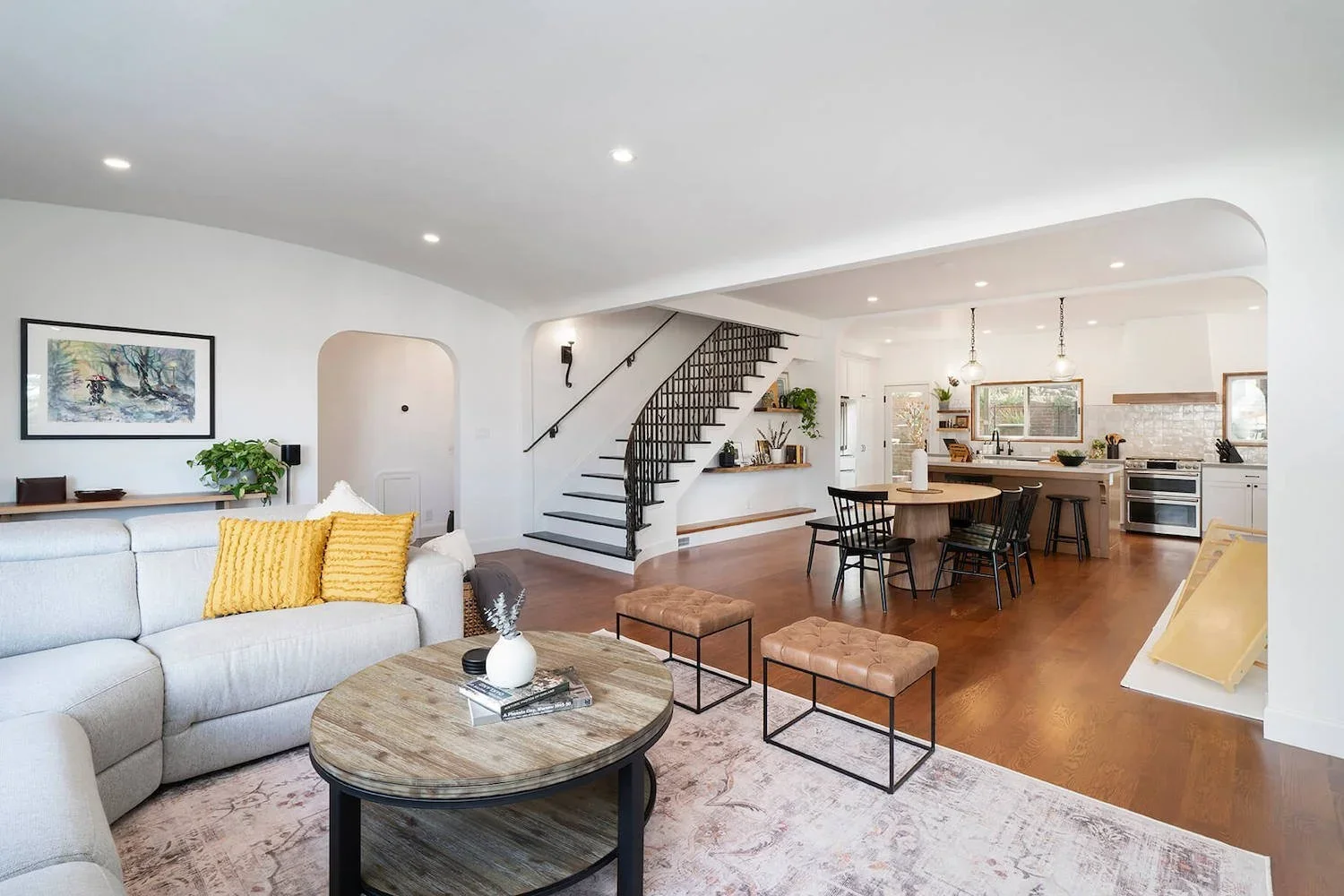
Open-concept living, dining, and kitchen area after a full home remodel, featuring hardwood floors, a modern staircase with black railing, updated lighting, and a cohesive layout designed for improved flow and functionality.
What Is Traditional Remodeling?
Traditional remodeling separates the design and construction phases. Homeowners typically hire a designer or architect first, then solicit bids from contractors to build the project.
Traditional remodels often involve:
Separate contracts for design and construction
Fixed plans completed before contractor pricing
Competitive bidding from multiple contractors
Homeowner-managed coordination between teams
While this model can work well for certain projects, it often requires more oversight from the homeowner.
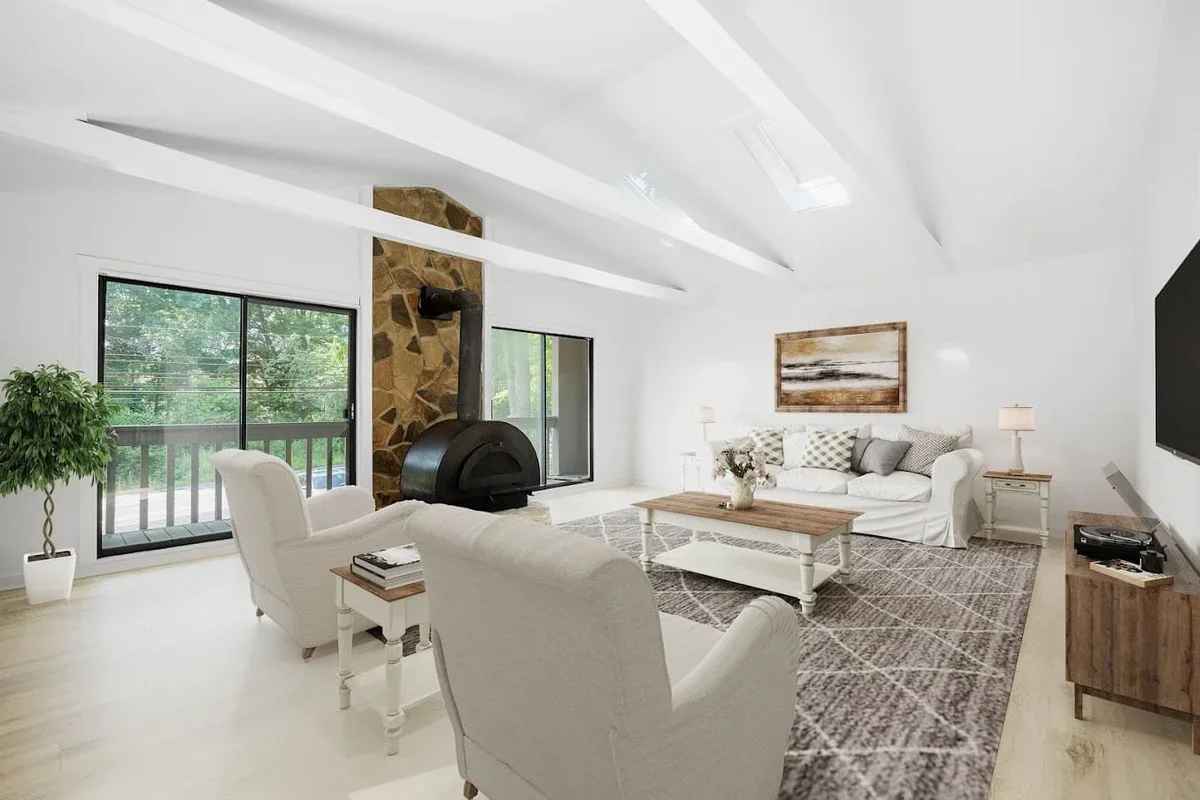
Bright open-concept living room with vaulted white ceiling, exposed beams, stone fireplace, light hardwood flooring, and large sliding glass doors opening to an outdoor deck, showcasing a completed home remodel with an airy, modern farmhouse aesthetic.
Design Build vs Traditional Remodel: Key Differences
When comparing design build vs traditional remodel, the main differences come down to communication, cost control, and accountability.
Design-Build Model
Integrated design and construction teams
Budget considerations throughout design
Faster timelines due to overlap of phases
Fewer surprises during construction
Clear accountability with one responsible firm
Traditional Remodeling Model
Design completed before contractor pricing
Potential redesign if bids exceed budget
Longer timelines due to sequential phases
Multiple parties responsible for outcomes
More homeowner involvement required
For complex or luxury projects, many homeowners find the design-build model more predictable and efficient.
Benefits of Design Build Remodeling
Understanding the benefits of design build remodeling helps explain why this approach is increasingly preferred for custom homes and renovations.
Key benefits include:
Better cost control from day one
Reduced change orders and delays
Strong collaboration between designers and builders
Realistic material and construction planning
Streamlined scheduling and project management
A design build contractor can adapt the design in real time to stay aligned with your investment goals—without sacrificing quality.
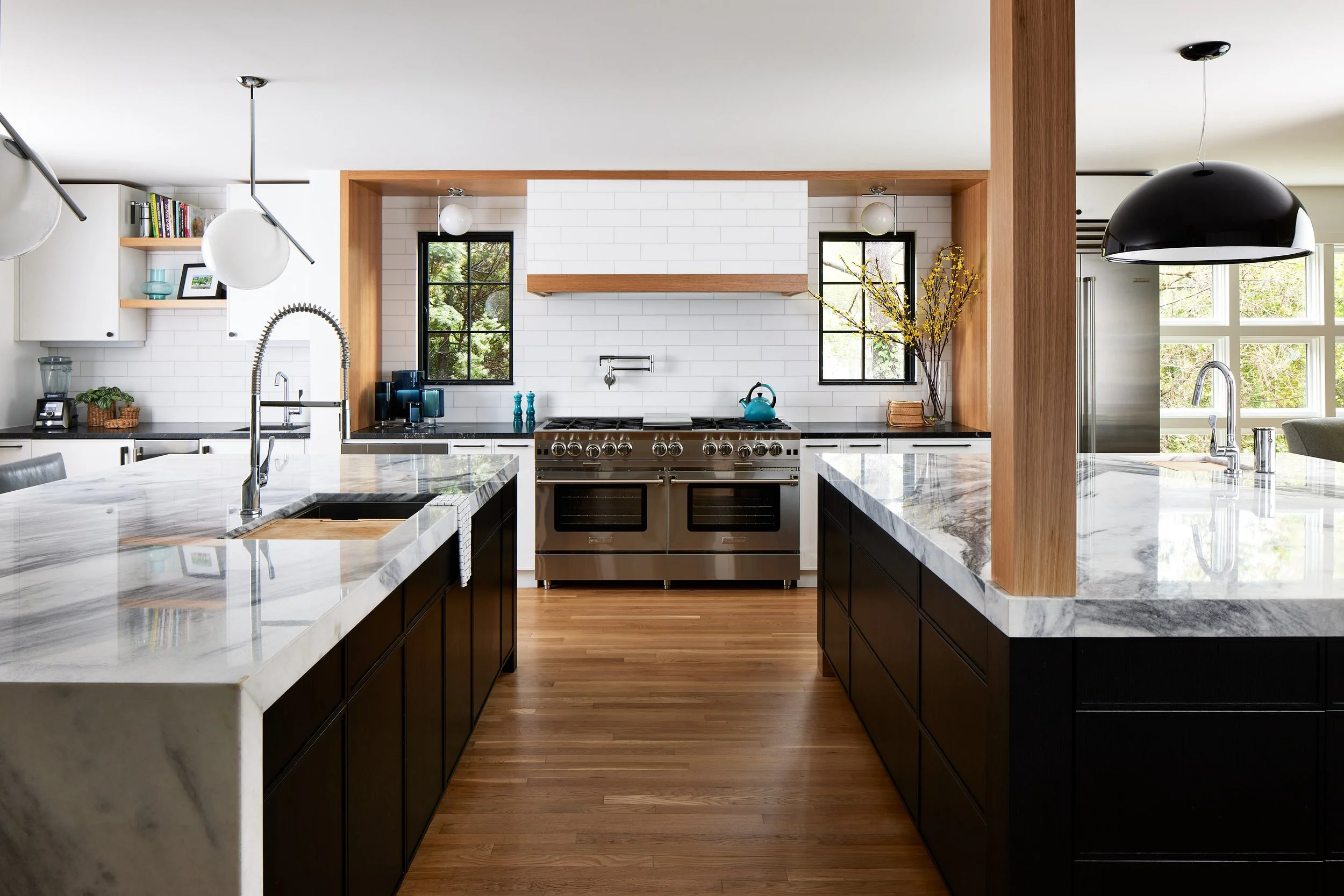
Modern kitchen remodel featuring dual marble waterfall islands with black cabinetry, white subway tile backsplash, professional stainless steel range, warm wood flooring, and contemporary pendant lighting, showcasing a high-end whole home renovation with balanced contrast and clean architectural lines.
High-End Design Build and Luxury Remodeling
A high end design build firm is particularly well-suited for complex renovations and custom homes. Luxury remodeling contractor teams bring both design expertise and construction precision to deliver refined results.
Luxury design-build projects often include:
Custom cabinetry and millwork
Premium materials and architectural detailing
Complex layouts or structural changes
Integrated lighting and smart home systems
High-performance building techniques
This level of coordination is difficult to achieve when design and construction teams are siloed.
Is Design Build Worth It?
If you’re asking is design build worth it, the answer depends on your priorities. Design-build is often the right choice if you value:
Clear communication and accountability
Predictable budgets and timelines
Fewer handoffs and misunderstandings
A cohesive design vision from start to finish
For homeowners pursuing luxury remodeling or full-home renovations, design-build often delivers a smoother experience and higher-quality outcome.
Which Remodeling Approach Is Right for You?
A traditional remodel may be suitable for simpler projects with clearly defined scopes. However, if your project involves multiple spaces, structural changes, or premium finishes, working with a design build firm can reduce stress and improve results.
Choosing the right approach ensures your renovation experience is as enjoyable as the final outcome.
Proudly serving San Jose, Campbell, Los Gatos, Saratoga, Cupertino, Sunnyvale, Santa Clara, Mountain View, Los Altos, Los Altos Hills, Palo Alto, Menlo Park, Stanford, Woodside, Emerald Hills, Atherton, South San Francisco, Redwood City, Foster City, Portola Valley, Belmont, San Mateo, Burlingame, Millbrae, Hillsborough, San Bruno, Daly City, Colma, Brisbane, Pacifica, Milpitas, San Carlos, and surrounding Bay Area communities.