ADU Construction Cost in the Bay Area: What Homeowners Actually Pay in 2025
ADU construction costs in the Bay Area are among the most searched — and most misunderstood — topics in residential construction. Online cost calculators give ranges so wide they're nearly useless. Contractor bids arrive at wildly different numbers for what seems like the same project. And the true cost of a completed, permitted, rent-ready ADU is almost always higher than the number homeowners first hear.
This guide gives you real, 2025-current cost benchmarks for every major ADU type in the Bay Area — with honest explanations of what drives costs, what's often left out of early estimates, and how to budget accurately for your specific project.
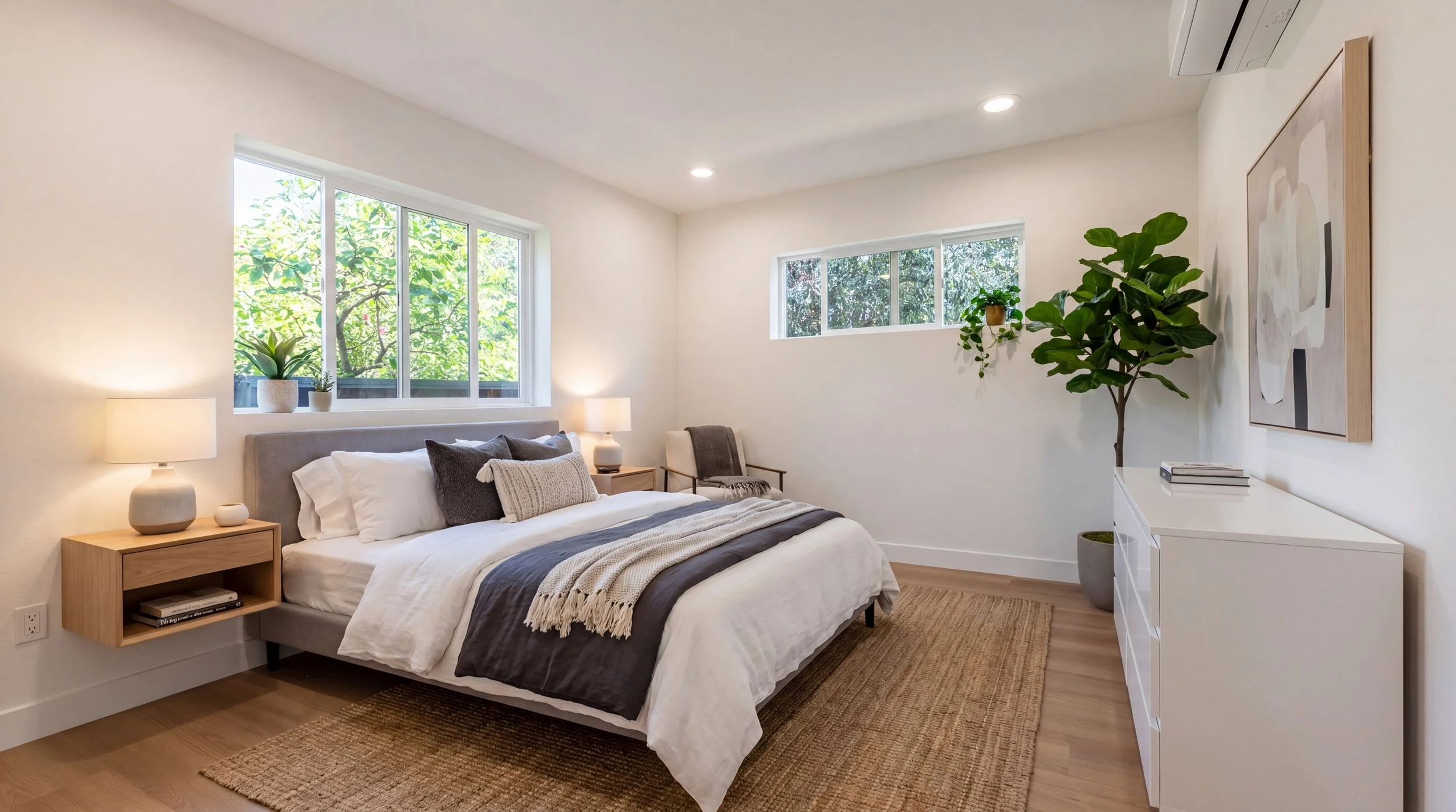
ADU Cost by Type: 2025 Bay Area Benchmarks
Here are realistic all-in cost ranges for completed, permitted ADUs in San Mateo County and Santa Clara County:
Garage Conversion ADU (400–600 sq ft)
• Simple conversion: $120,000–$180,000
• Mid-range finish: $180,000–$240,000
• Premium finish: $240,000–$320,000Junior ADU / JADU (up to 500 sq ft, within existing home footprint)
• Basic: $80,000–$130,000
• Mid-range: $130,000–$180,000
Attached ADU (400–800 sq ft)
• Mid-range: $220,000–$350,000
• Premium: $350,000–$500,000
Detached ADU — New Construction (400–800 sq ft)
• Mid-range: $280,000–$420,000
• Premium: $420,000–$600,000
Detached ADU — New Construction (800–1,200 sq ft)
• Mid-range: $420,000–$600,000
• Premium: $600,000–$850,000
Above-Garage ADU (600–900 sq ft, new construction above new garage)
• Typical range: $350,000–$550,000
These figures assume full design, permitting, and construction by a licensed Bay Area contractor with all mechanical systems, finishes, and utility connections included.
What's Included in an ADU Budget
A complete ADU budget must account for:
Design and architecture: $12,000–$35,000 for ADU-specific drawings. Design-build firms often include this in the construction contract.
Structural engineering: $5,000–$15,000 depending on project complexity.
Permit fees: Vary significantly by city. In Palo Alto, total fees (building, planning, school impact fees) can reach $30,000–$60,000 on an ADU. In San Mateo or Redwood City, expect $8,000–$25,000.
Site work and grading: $15,000–$60,000 for detached ADUs on sloped lots.
Foundation: $25,000–$80,000 for detached ADUs. Garage conversions have existing foundations.
Utility connections (the most underestimated cost): New electrical panel upgrade, water meter (if required by city), sewer lateral connection, and gas line extension. Total: $20,000–$80,000 depending on existing infrastructure and city requirements.
Framing and exterior: $60,000–$150,000 for detached ADUs.
Mechanical (plumbing, electrical, HVAC): $40,000–$90,000.
Insulation, drywall, and interior finishes: $60,000–$150,000 depending on size and finish level.
Landscaping and site restoration: $10,000–$40,000.
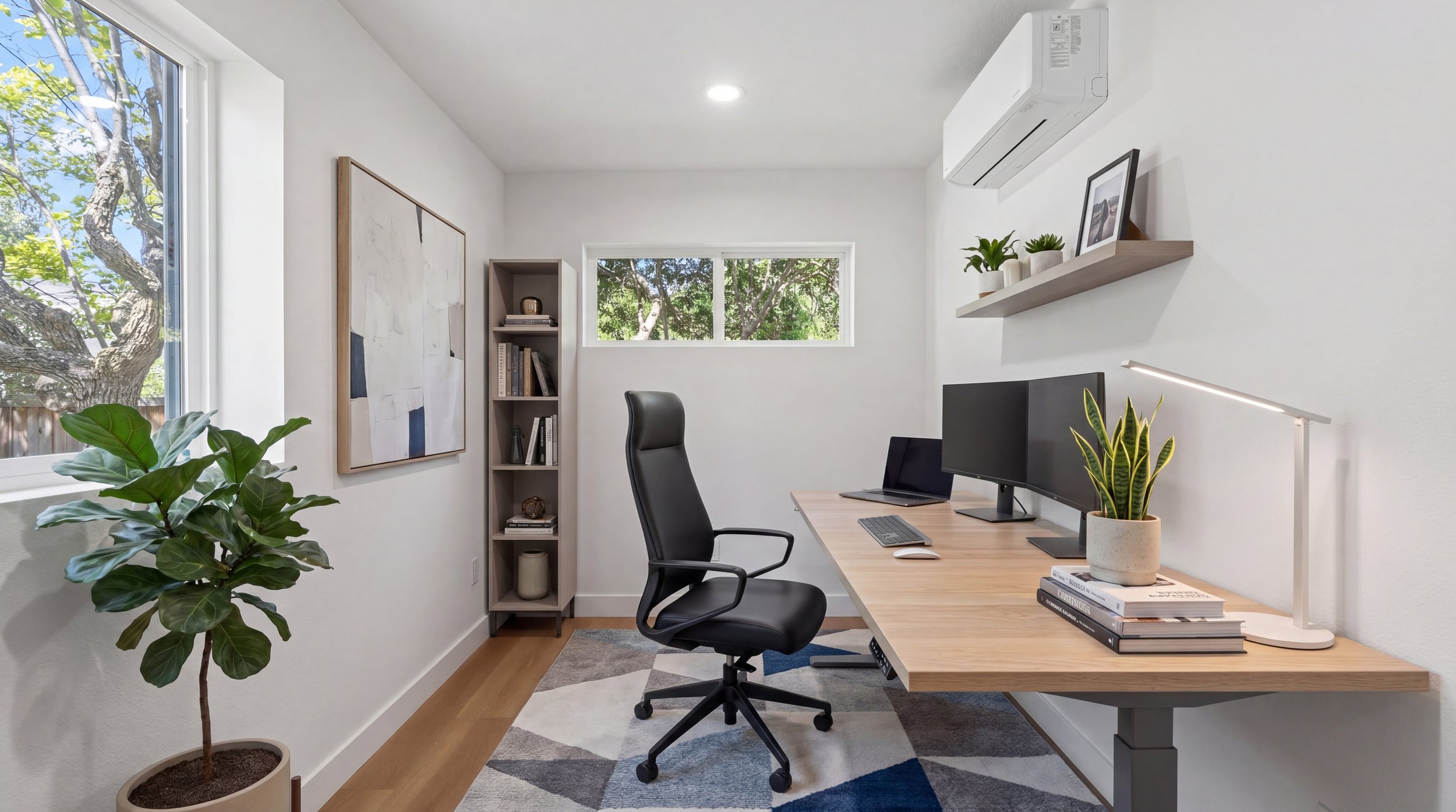
The Utility Connection Cost Trap
The single most common source of ADU budget surprises in the Bay Area is utility connection costs — specifically:
Electrical panel upgrade: Most Bay Area homes have a 100-amp or 150-amp service panel. An ADU adds electrical load that frequently requires upgrading to 200-amp service — costing $5,000–$15,000 including PG&E coordination.
Separate utility meters: Some Bay Area cities or utility districts require a separate water meter for an ADU. New water meter installation, including connection fees, can cost $15,000–$40,000.
Sewer connection: If your lot isn't currently connected to the sewer lateral in the right location, running a new sewer line can cost $8,000–$30,000 depending on distance and site conditions.
These costs appear in the "civil" or "utility" line items of a detailed bid — but they're often absent from early ballpark estimates. Always confirm that any ADU bid explicitly addresses utility connection costs.
What Drives Cost Variation for Bay Area ADUs
Two ADUs of the same square footage can have dramatically different costs based on:
Site conditions: A detached ADU on a flat, easily accessible lot with nearby utilities costs significantly less than the same unit on a sloped rear lot with limited access and aging utility infrastructure.
Finish level: Builder-grade finishes vs. premium materials add $40,000–$100,000+ to the same ADU footprint. Kitchen cabinetry, countertops, flooring, bathroom tile, and fixture quality are the primary drivers.
City permit fees and requirements: Palo Alto's ADU permitting fees are among the highest in the Bay Area. Some cities also require fire sprinklers, solar, or specific accessibility features that add cost.
Existing conditions for conversions: A garage with good bones — concrete slab, solid walls, adequate ceiling height — converts less expensively than one requiring slab work, structural reinforcement, or ceiling modifications.
Design complexity: A simple rectangular ADU with a straightforward roof costs less than one with complex geometry, multiple rooflines, or custom exterior details to match a distinctive main home.
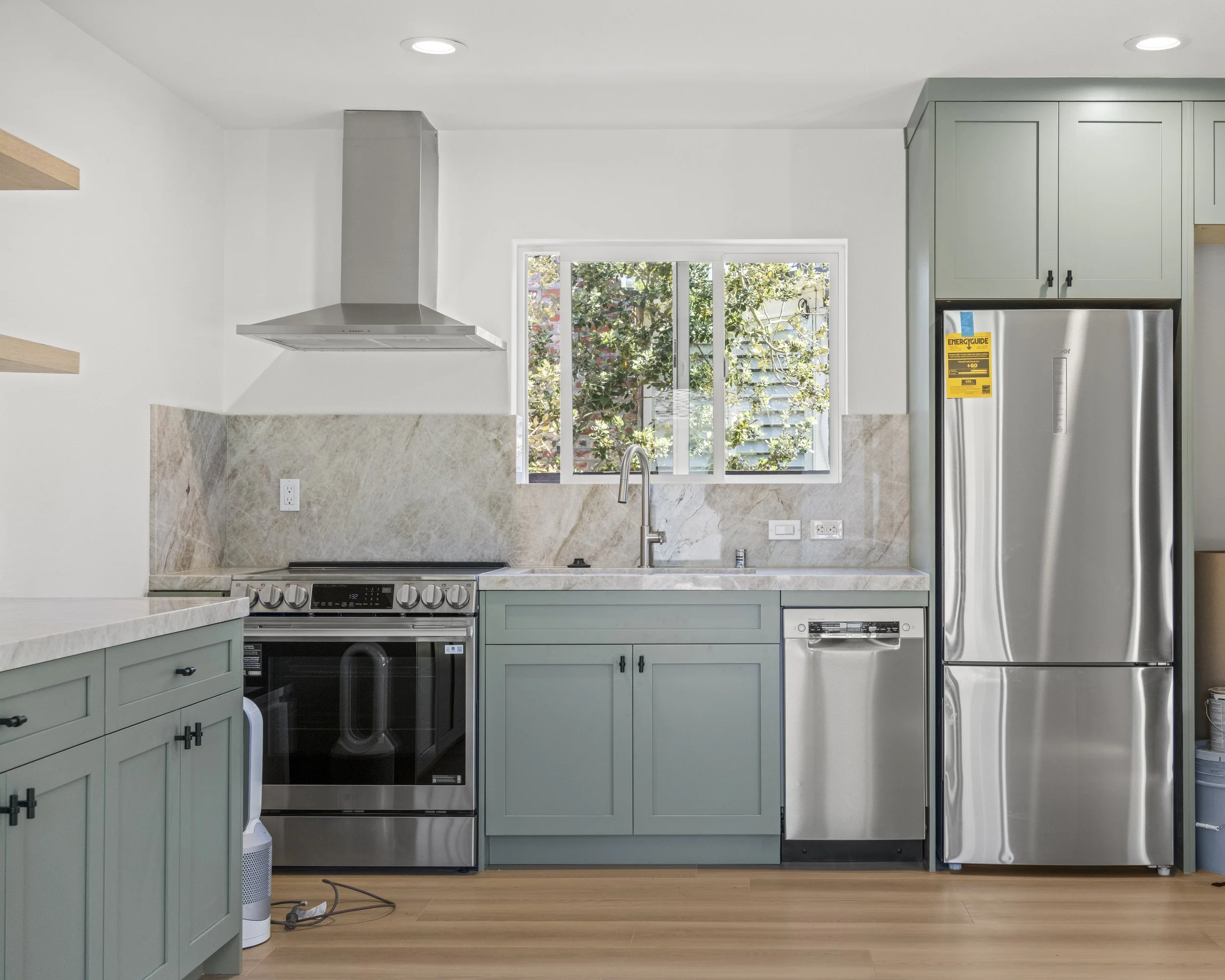
ADU ROI: When Does the Cost Make Financial Sense?
The financial case for a Bay Area ADU is strong in most scenarios:
Rental income: A well-finished detached ADU in Palo Alto, Menlo Park, or San Mateo can command $3,000–$4,500/month in rent. At $3,500/month, a $400,000 ADU investment generates $42,000/year in gross rental income — a 10.5% gross yield before operating costs.
Property value increase: Studies of Bay Area properties consistently show ADUs add 20–30% of their construction cost to assessed value — often more in high-demand rental markets. A $350,000 ADU investment may add $400,000–$500,000 in market value in competitive Palo Alto or Menlo Park submarkets.
Family housing: For homeowners housing aging parents or adult children, the value of proximity and the avoided cost of alternative housing arrangements often exceeds rental income scenarios.
The financial case is strongest for detached ADUs in high-rent Bay Area cities, weakest for JADUs or small garage conversions in lower-rent areas where rental income doesn't justify construction cost. Always run the specific numbers for your property before committing.
Getting an Accurate ADU Cost Estimate
The most reliable path to an accurate ADU budget:
1. Engage a design-build ADU contractor for a paid feasibility assessment. A few hundred dollars for a serious feasibility study is worthwhile before committing to full design.
2. Get at least two detailed bids once preliminary design is complete — compare line by line, not just total numbers.
3. Confirm that bids include: design/permitting, all utility connections, site work, complete finishes, and landscaping restoration.
4. Ask specifically what the contractor's utility connection allowances are based on — and whether they've confirmed those costs with the utility provider and city.
5. Budget a 10–15% contingency on top of the contract price for unexpected conditions.A contractor who provides a detailed, itemized bid with explicit allowances and clear exclusions is a contractor operating professionally. Vague lump-sum numbers are a warning sign.
Proudly serving San Jose, Campbell, Los Gatos, Saratoga, Cupertino, Sunnyvale, Santa Clara, Mountain View, Los Altos, Los Altos Hills, Palo Alto, Menlo Park, Stanford, Woodside, Emerald Hills, Atherton, South San Francisco, Redwood City, Foster City, Portola Valley, Belmont, San Mateo, Burlingame, Millbrae, Hillsborough, San Bruno, Daly City, Colma, Brisbane, Pacifica, Milpitas, San Carlos, and surrounding Bay Area communities.