The Advantages and Disadvantages of Walk-In Bathtubs
A walk-in bathtub is designed to improve safety, accessibility, and comfort—especially for homeowners who want to age in place or reduce the risk of bathroom slips and falls. With a low-entry door and built-in seating, walk-in tubs have become a popular option for seniors and anyone with limited mobility.
Like any home feature, however, there are both benefits and limitations to consider. Below is a clear breakdown of walk-in bathtub pros and cons to help you decide if this solution is right for your home.
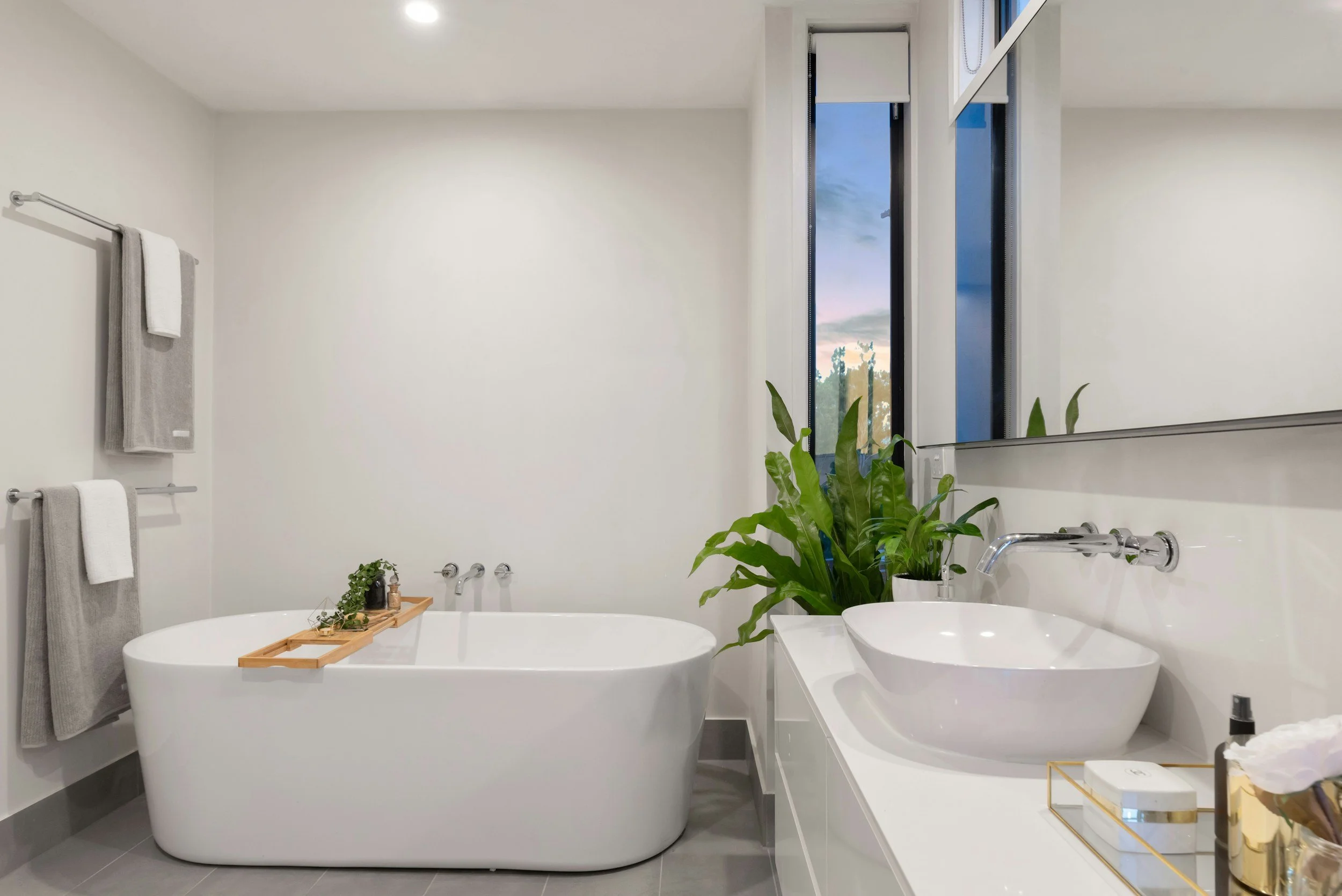
Modern bathroom featuring a freestanding soaking tub and contemporary vanity, illustrating a spa-inspired alternative to walk-in bathtubs in accessible bathroom design discussions.
1. Improved Safety
One of the biggest walk-in tub benefits is enhanced safety. The low threshold entry significantly reduces the risk of tripping compared to stepping over a traditional bathtub wall. Many walk-in tubs also include grab bars, textured flooring, and built-in seats to improve stability.
2. Ideal for Aging in Place
Walk-in bathtubs for elderly homeowners are especially beneficial because they support long-term independence. They allow users to bathe comfortably without relying on assistance, making them a smart option for aging-in-place renovations.
3. Comfortable Seating and Support
Most walk-in tubs feature molded seating, armrests, and back support. This design eliminates the need to sit or stand on a slippery surface, offering a more relaxed bathing experience.
4. Therapeutic Features
Many walk-in bathtubs offer hydrotherapy options such as air jets or water jets. These features can help relieve joint pain, improve circulation, and promote relaxation—especially for users with arthritis or mobility challenges.
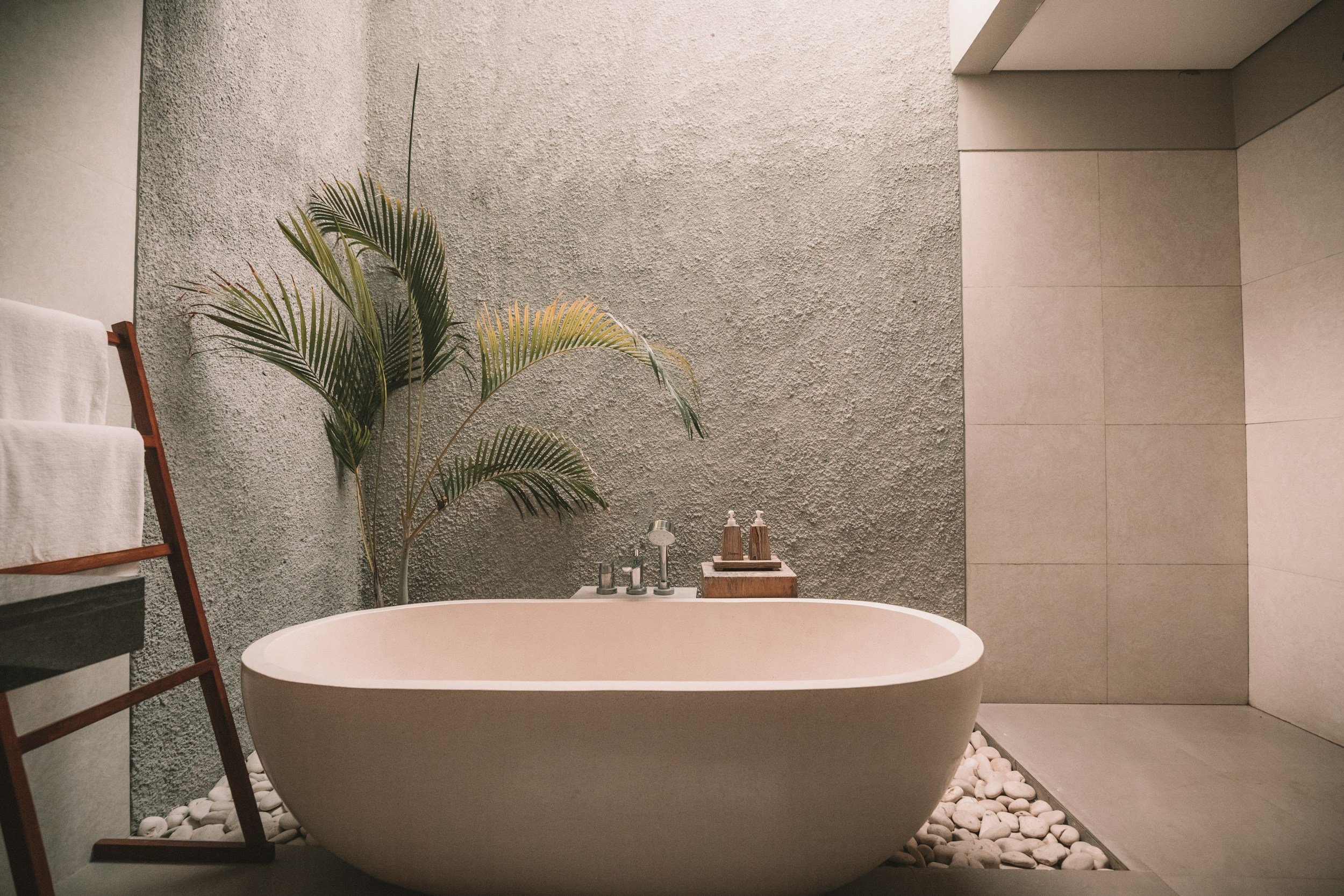
Spa-style freestanding bathtub set against a textured wall with natural elements, highlighting comfort and aesthetics often compared to walk-in bathtub designs.
Walk-In Bathtub Drawbacks
1. Higher Cost
One of the main walk-in bathtub drawbacks is cost. Walk-in tubs are more expensive than standard bathtubs due to specialized construction, added safety features, and installation requirements.
2. Longer Bathing Time
Because the tub must be filled and drained while the user is seated inside, walk-in tubs can take longer to use. This may be uncomfortable for some users, especially if water temperature drops while waiting.
3. Space Requirements
A walk-in tub typically requires more space than a standard tub or shower. In smaller bathrooms, installing a walk-in tub may limit layout options or require a larger remodel.
4. Limited Appeal for Resale
While excellent for accessibility, walk-in tubs may not appeal to all future buyers. Some homeowners view them as niche features, which could impact resale appeal depending on the market.
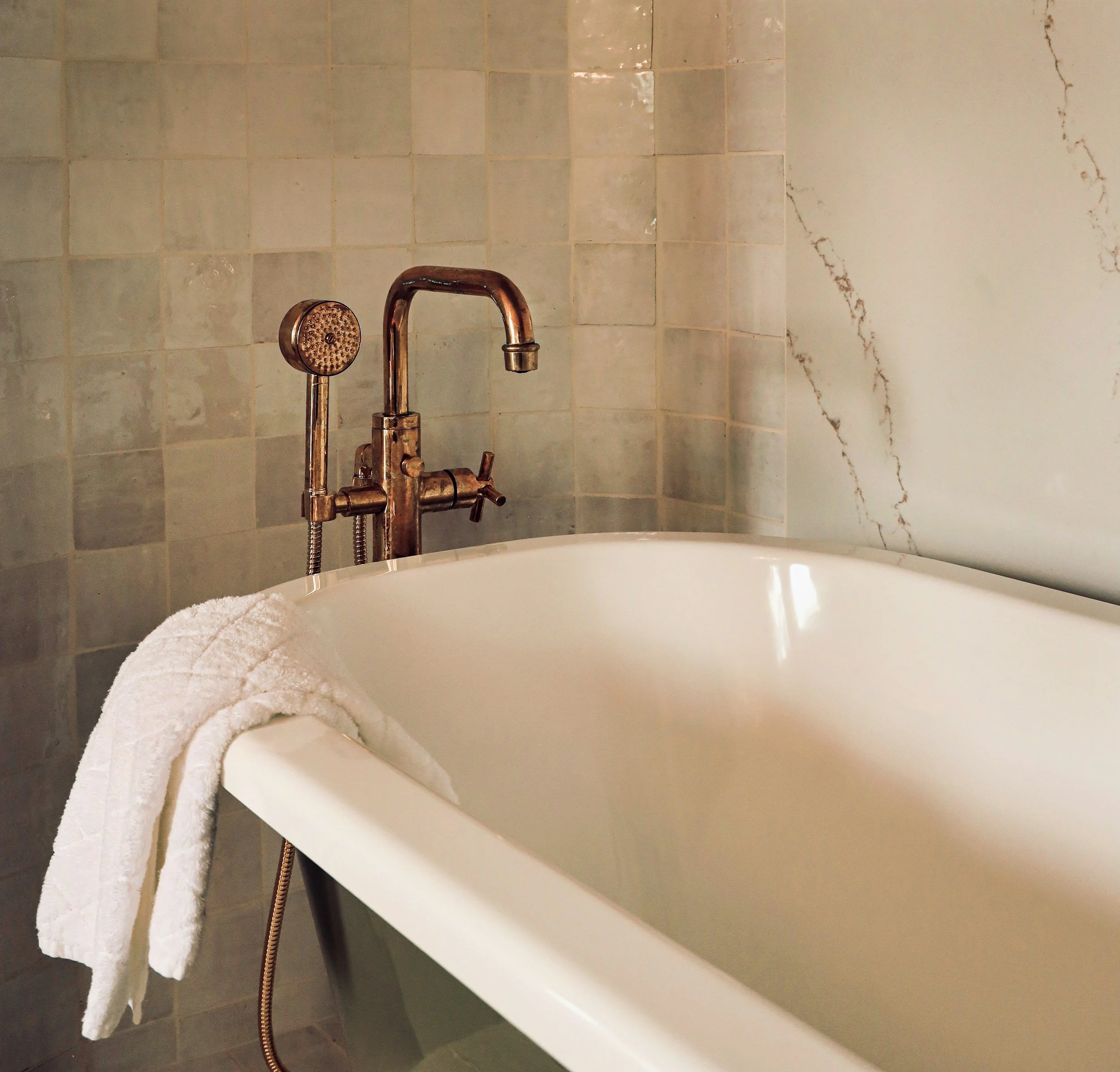
Close-up of a bathtub with traditional faucet and hand shower, showing design details that differ from walk-in bathtubs with built-in doors and safety features.
Walk-In Tub Safety Considerations
When evaluating walk-in tub safety, look for:
Non-slip flooring
ADA-compliant grab bars
Low step-in height
Fast-drain or emergency drain systems
Anti-scald temperature controls
These features help ensure the tub is both safe and comfortable for daily use.
A walk-in tub may be a good fit if:
You want to improve bathroom safety
You’re planning to age in place
You have mobility or balance concerns
Comfort and accessibility are priorities
If space or resale value is a concern, alternatives such as curbless showers or tub-to-shower conversions may be worth considering.
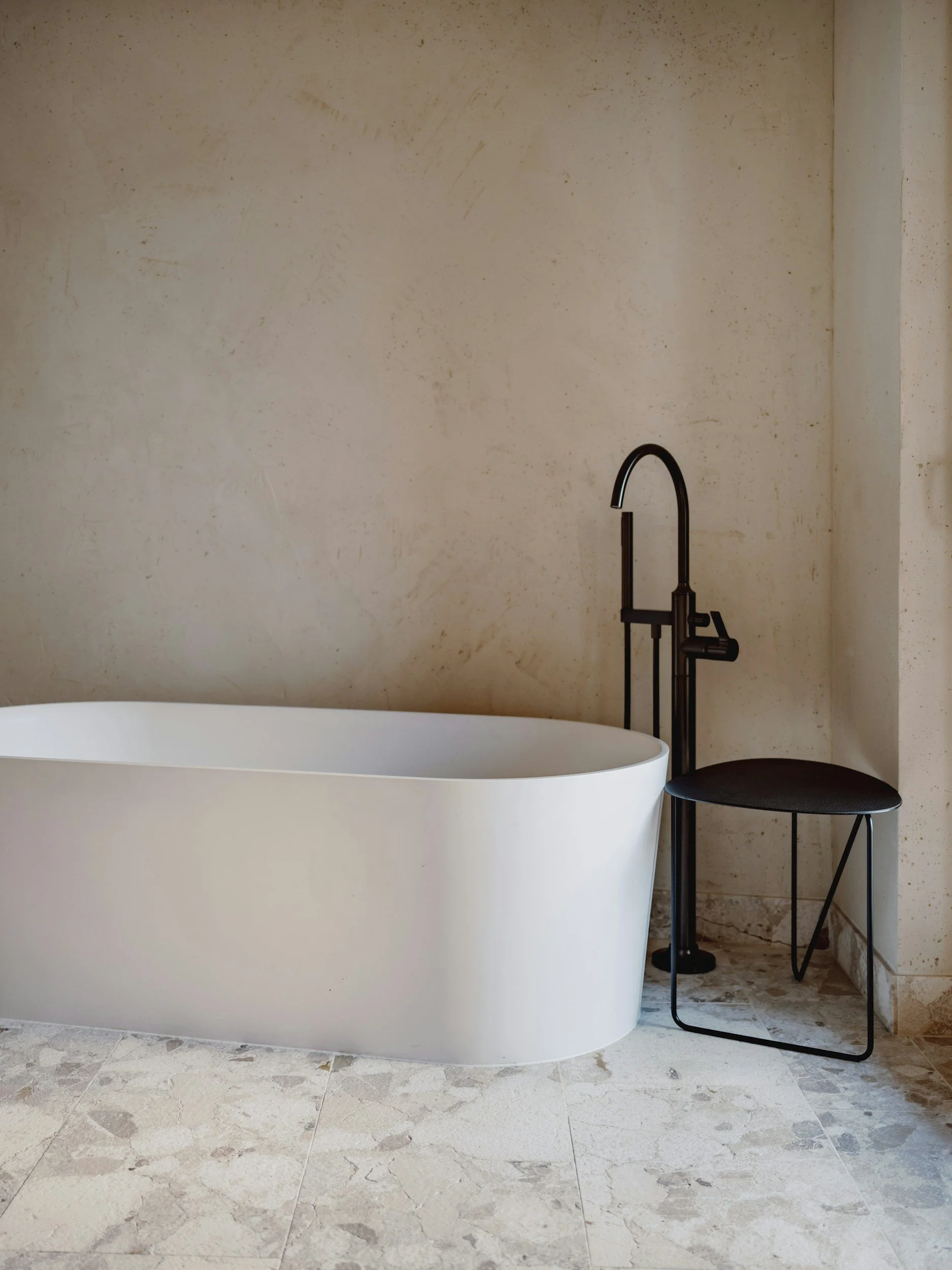
Freestanding bathtub with floor-mounted faucet and minimalist accessories, representing a sleek option often weighed against the accessibility benefits of walk-in bathtubs.
Ready to Upgrade Your Bathroom?
If you’re considering a walk-in bathtub, walk-in tub installation, or a full bathroom remodel, the next step is a site visit and a clear plan tailored to your home. Understanding your space, mobility needs, and long-term goals early on helps ensure a safe and comfortable result.
EDR Design Build provides experienced guidance, thoughtful design, and quality craftsmanship to help you create a bathroom that’s functional, accessible, and built to last.
Click the button below to get started, or call 650-888-2107 to schedule your consultation.
Serving San Jose, Campbell, Los Gatos, Saratoga, Cupertino, Sunnyvale, Santa Clara, Mountain View, Los Altos, Los Altos Hills, Palo Alto, Menlo Park, Stanford, Woodside, Emerald Hills, Atherton, South San Francisco, Redwood City, Foster City, Portola Valley, Belmont, San Mateo, Burlingame, Millbrae, Hillsborough, San Bruno, Daly City, Colma, Brisbane, Pacifica, Milpitas, San Carlos, and Bay Area communities.