Open-Concept Remodels: When They Work and When They Don’t
An open concept remodel can completely transform how a home looks and feels, creating brighter spaces and stronger connections between rooms. Popular in a modern home remodel, open layouts support today’s lifestyles—but they aren’t the right solution for every home. Understanding when open concept works (and when it doesn’t) helps homeowners make confident, design-forward decisions.
Whether you’re planning a contemporary home renovation or a luxury home remodel, the key is balance—not just openness.
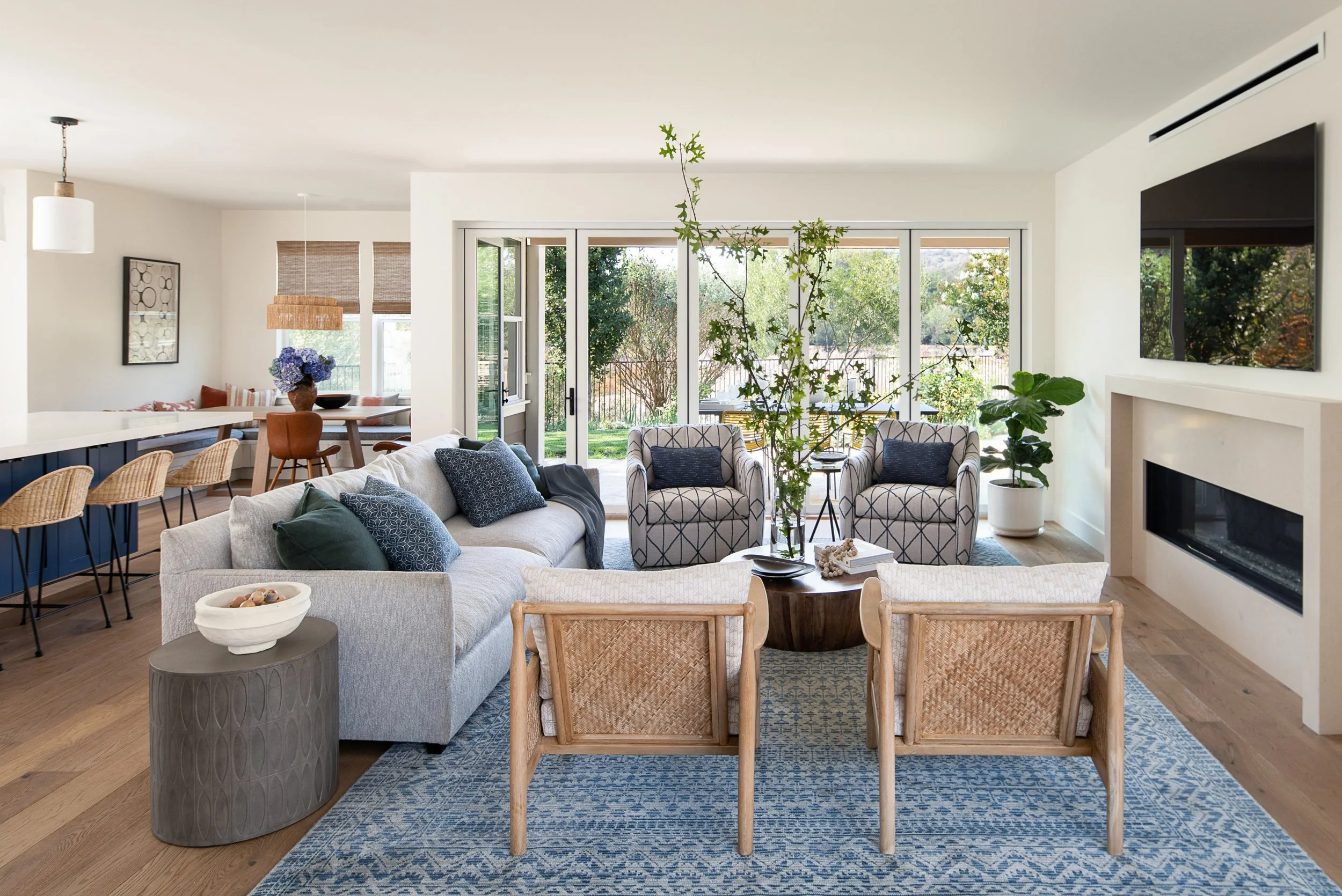
Open-concept home remodel with a light-filled living room flowing into a modern kitchen and dining area, featuring wide-plank wood flooring, sliding glass doors to the backyard, cohesive finishes, and seamless indoor–outdoor connection.
What Is an Open Concept Remodel?
An open concept remodel removes walls or visual barriers between key living spaces—typically the kitchen, dining, and living areas—to create one connected environment.
Common characteristics include:
Fewer interior walls
Shared natural light across rooms
Clear sightlines and flexible layouts
Integrated kitchen and living spaces
Open layouts are a hallmark of modern open floor plan remodel ideas, but thoughtful planning is essential.
When Open-Concept Remodels Work Best
If you’re asking is open concept right for my home, certain conditions make it more successful.
Open concept remodels tend to work well when:
The home has sufficient square footage
Structural changes are feasible
Natural light can reach multiple zones
The household values connection and entertaining
Storage solutions are well-planned
In these cases, open layouts can make homes feel larger, brighter, and more social.
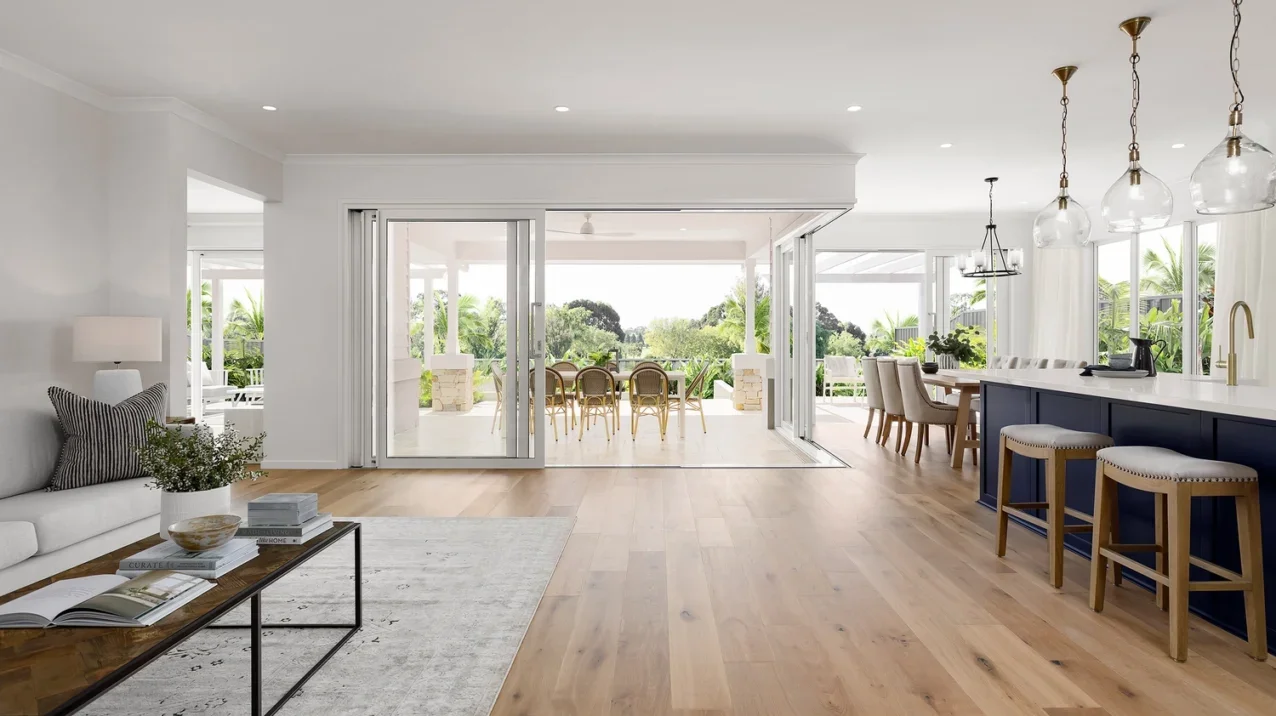
Open-concept home remodel featuring seamless wide-plank wood flooring, a bright living area flowing into a modern kitchen with a blue island, large sliding glass doors opening to an outdoor dining patio, and abundant natural light connecting indoor and outdoor spaces.
Open Concept Remodel Pros and Cons
Understanding open concept remodel pros and cons helps homeowners weigh aesthetics against practicality.
Pros
Improved natural light
Better flow and sightlines
Ideal for entertaining and family interaction
Contemporary, updated feel
Cons
Reduced privacy and noise control
Limited wall space for storage or art
More challenging heating and cooling
Less separation between functions
A skilled designer helps balance openness with comfort.
When Open Concept Doesn’t Work
Open layouts aren’t always the best choice—especially in homes with certain layouts or lifestyles.
Open concept may not be ideal if:
The home is small or narrow
Structural walls are difficult or costly to remove
Privacy is a priority
The household has varied schedules
Distinct rooms are architecturally important
In these cases, partial openings or strategic sightlines may be a better solution.
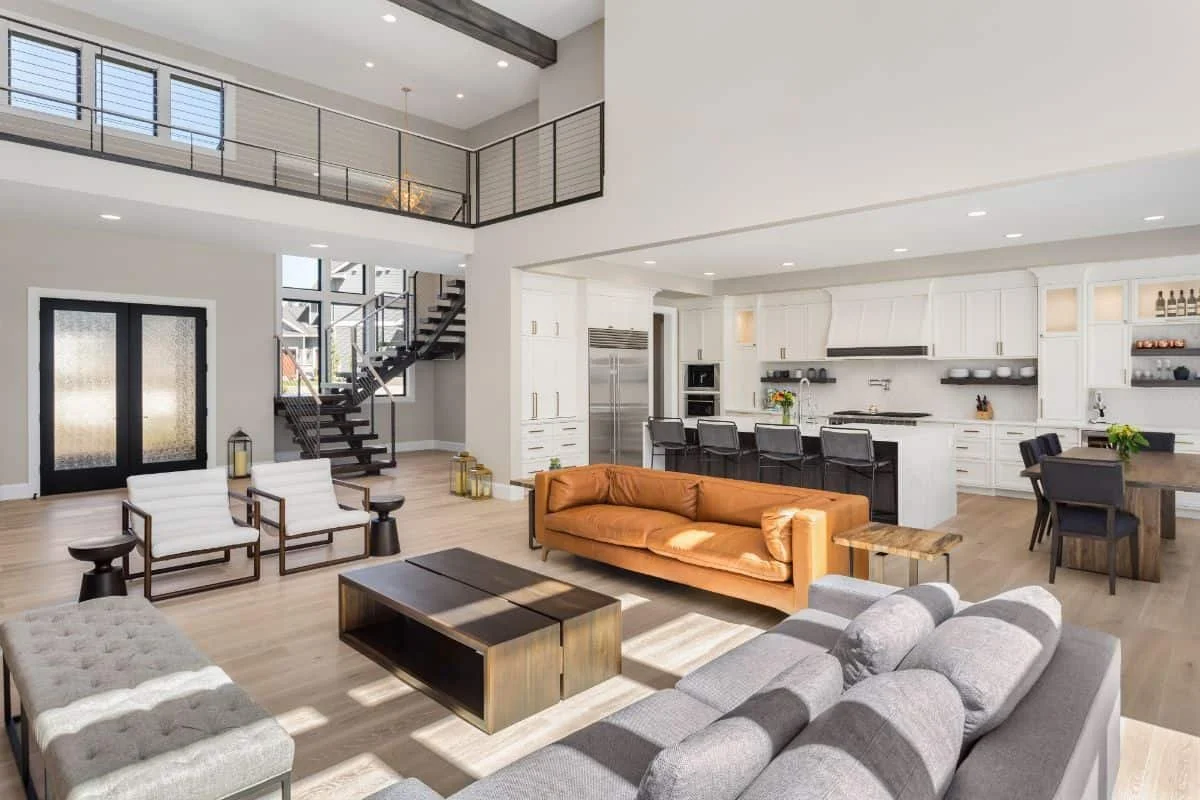
Open-concept remodel featuring a double-height living space with a modern open staircase and mezzanine railing, seamlessly connecting the living room, dining area, and white kitchen with a large island, wide-plank wood flooring, and abundant natural light throughout.
Modern Open Floor Plan Remodel Ideas
A modern home remodel doesn’t require removing every wall. Today’s modern open floor plan remodel ideas focus on flexibility and zoning.
Design strategies include:
Partial walls or glass partitions
Cased openings instead of full removals
Ceiling treatments to define zones
Flooring transitions for visual separation
Integrated storage and built-ins
These approaches maintain openness while preserving function.
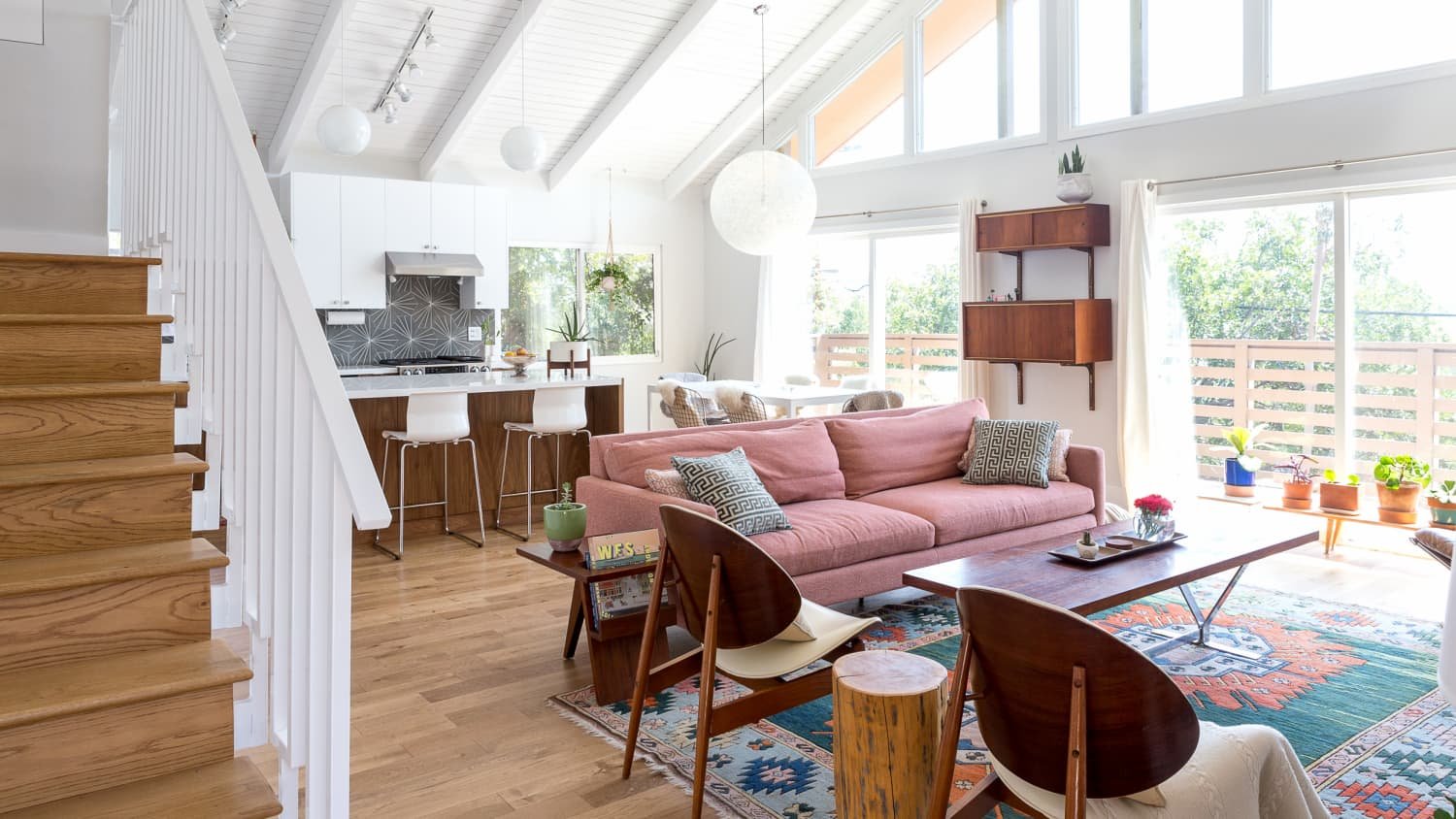
Open-concept remodel featuring a vaulted ceiling living room that flows into a modern kitchen, with wide-plank wood flooring, an open staircase, large windows for natural light, and cohesive finishes connecting the living, dining, and kitchen areas.
Open Concept in a Luxury Home Remodel
In a luxury home remodel, open concept design is often elevated through thoughtful detailing and material selection.
Luxury elements may include:
Custom cabinetry that anchors open spaces
Statement lighting to define zones
High-end finishes that flow consistently
Architectural details that replace removed walls
When executed well, open layouts feel intentional—not empty.
Choosing the Right Remodeling Approach
An open concept remodel is a design choice—not a requirement. The right solution depends on your home’s structure, lifestyle, and long-term goals.
Working with an experienced team ensures your modern home remodel enhances comfort, beauty, and functionality—without compromising livability.
Proudly serving San Jose, Campbell, Los Gatos, Saratoga, Cupertino, Sunnyvale, Santa Clara, Mountain View, Los Altos, Los Altos Hills, Palo Alto, Menlo Park, Stanford, Woodside, Emerald Hills, Atherton, South San Francisco, Redwood City, Foster City, Portola Valley, Belmont, San Mateo, Burlingame, Millbrae, Hillsborough, San Bruno, Daly City, Colma, Brisbane, Pacifica, Milpitas, San Carlos, and surrounding Bay Area communities.