
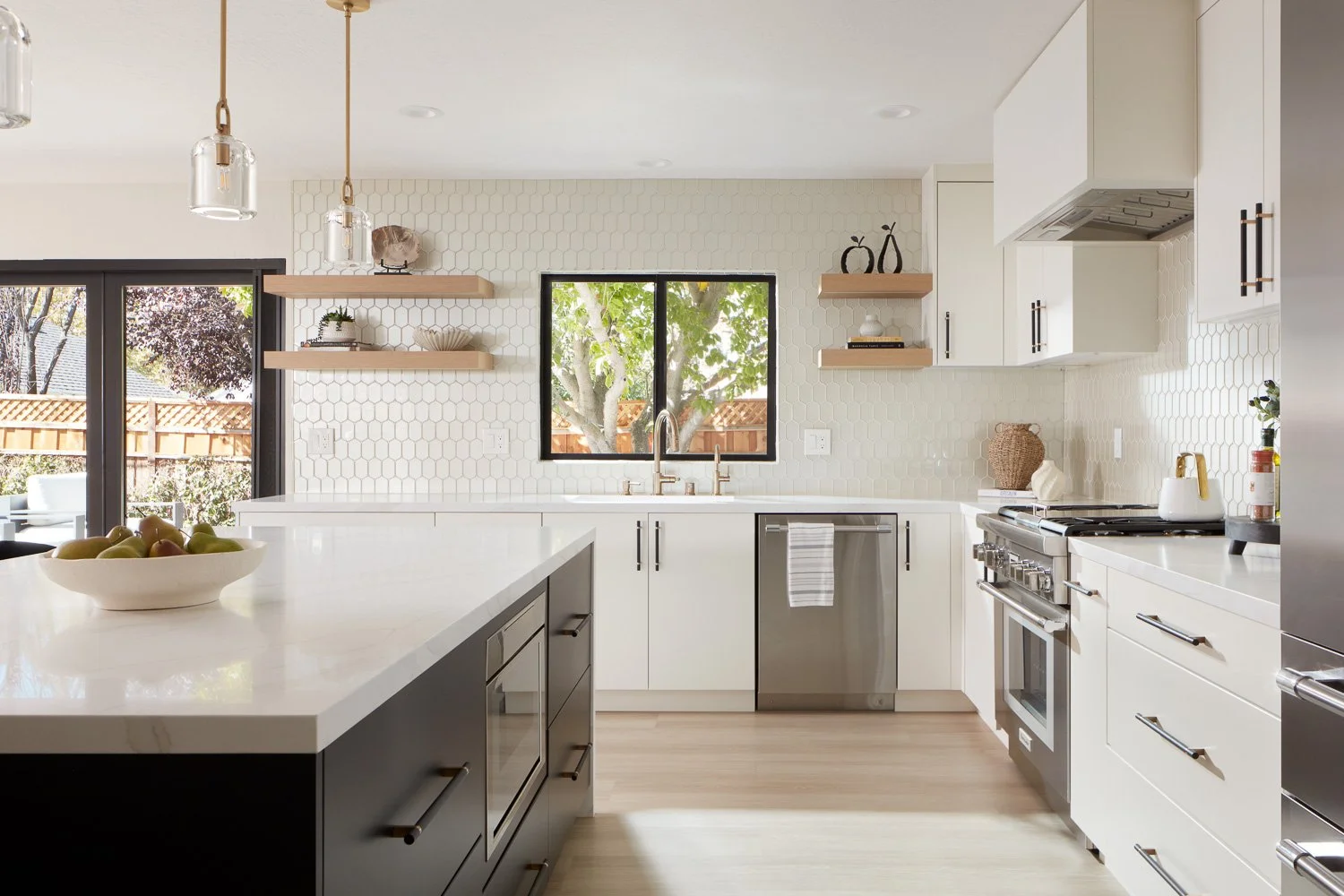
A cramped kitchen, a fragmented floor plan, and aging systems can make a well-located Bay Area home feel harder to live in every year. The question of new construction versus renovation is not simply about whether to keep walls standing. It is a decision about how much of the existing home truly serves your future, how much uncertainty you are willing to accept, and what level of control you want over the final result.
For some homeowners, a major remodel preserves a home they love while correcting the parts that no longer work. For others, a teardown and rebuild creates a more efficient path to a fully custom home. The right answer depends on the property, the condition of the structure, local regulations, budget priorities, and how dramatically you want to change the way you live.
New Construction Versus Renovation: Start With the Existing Home
A renovation works best when the existing house has a sound structure, a usable footprint, and features worth preserving. This may include a well-proportioned living room, quality original details, a favorable orientation, or a foundation that can reasonably support an addition. A whole-home remodel can modernize mechanical systems, improve circulation, add square footage, and bring the home closer to current expectations without starting from zero.
But older homes often contain unknown conditions behind the walls. Outdated wiring, undersized plumbing, dry rot, uneven framing, prior unpermitted work, and foundation issues can affect both cost and schedule. These conditions do not automatically make renovation the wrong choice. They do mean the project should begin with careful site investigation and a realistic plan for contingencies.
New construction offers a cleaner slate. When a home is demolished and rebuilt, the design team can plan the structure, systems, windows, insulation, and room layout as one coordinated whole. That makes it easier to create the ceiling heights, indoor-outdoor connection, storage, energy performance, and modern floor plan many homeowners want. It also avoids forcing a new design around inherited structural limitations.
The trade-off is that a teardown-and-rebuild project comes with its own requirements. Demolition, site preparation, utility coordination, engineering, permitting, and local zoning rules all need to be addressed early. In Los Gatos and across the Bay Area, lot coverage, setbacks, height limits, heritage considerations, tree protection, and neighborhood requirements can strongly influence what is possible.
Compare the Scope, Not Just the Price
Homeowners often begin with a simple question: Is it cheaper to renovate or build new? The honest answer is that it depends on the scope.
A focused renovation that updates finishes, reworks a kitchen, or improves several rooms will generally cost less than replacing an entire house. However, once a project involves extensive structural changes, a major addition, full system replacement, seismic upgrades, and significant reconfiguration, the gap between renovation and new construction can narrow.
A lower initial renovation estimate can also become less predictable if the existing home holds substantial hidden issues. New construction usually provides more clarity because the work is defined from the ground up, although material selections, site conditions, and design changes still affect the final investment.
The better comparison is not price per square foot alone. Consider what each option delivers. A renovation may provide meaningful improvement while retaining portions of the home that are still functional. A new home can provide a completely integrated result, with every room, system, and finish planned around your needs from the beginning.
When Renovation Creates Strong Value
Renovation is often the right path when the home has good bones and the desired changes are achievable within its existing structure. It can be especially practical if you want to retain the character of an older property, preserve a portion of the house during construction, or avoid the scope of a complete replacement.
A well-planned remodel can address the reasons homeowners outgrow a house in the first place. Opening a closed-off kitchen, adding a primary suite, converting underused space, improving natural light, or building an ADU can change how the property functions without erasing its identity.
Renovation also makes sense when zoning limits make a replacement home no larger or more advantageous than the existing one. Before assuming a rebuild will create more usable space, review the allowable building envelope and compare it to what already exists.
When New Construction Is the Better Move
A teardown and rebuild becomes compelling when the current home requires extensive repair before any design improvements can begin. If the foundation, framing, systems, layout, and building envelope all need major work, investing heavily in the existing structure may offer limited return.
New construction is also a strong choice when your goals cannot fit within the house you have. A family seeking a modern open plan, higher ceilings, a dedicated home office, a first-floor guest suite, expanded garage capacity, and high-performance construction may find that a rebuild offers a more direct route than repeatedly compromising around old walls and low rooflines.
This approach gives you the greatest design freedom, but it requires disciplined planning. The most successful projects establish priorities early: required square footage, room relationships, architectural style, energy goals, finish level, and a realistic investment range. Those decisions allow the team to design a home that fits both the site and the way your household actually lives.
Timeline Depends on Decisions and Coordination
Neither option is automatically fast. A smaller renovation can move more quickly than a full rebuild, particularly when the design is straightforward and permits are limited. A major renovation, however, can become complex when existing conditions require redesign, engineering changes, or additional approvals.
New construction has a larger upfront planning phase, but construction can be more efficient once work begins because the sequence is easier to coordinate. There is less need to protect, work around, or connect to aging portions of the house. The key is to avoid treating design, permitting, and construction as separate problems.
That is where an integrated design-build approach matters. When one team coordinates design, permitting, budgeting, and construction, decisions can be evaluated against real construction conditions earlier. Instead of passing responsibility between an architect, estimator, permit consultant, and contractor, homeowners have one accountable project team managing the full process.
At EDR Design Build, that coordination is central to how major residential projects are planned and delivered. The goal is not simply to move faster. It is to reduce avoidable delays, clarify decisions before construction, and keep the project moving with informed oversight from concept through completion.
Do Not Overlook Permits, Codes, and Site Constraints
In California, major remodeling and new construction both require careful attention to permitting and current code requirements. A renovation can trigger upgrades to electrical, plumbing, energy, fire safety, and structural elements. The more extensive the work, the more likely the project will need to meet modern standards in areas beyond the room being remodeled.
A new home must comply with current building, energy, and local planning requirements throughout. That can improve safety, comfort, and performance, but it also makes early design coordination essential. Soil conditions, utility locations, drainage, protected trees, hillside conditions, and neighborhood review can all shape the timeline and budget.
A feasibility review should happen before a homeowner becomes attached to a floor plan or a rough online cost estimate. Confirm what the lot permits, what the existing home requires, and which path provides the strongest long-term result for the investment.
Choose the Path That Fits the Next Chapter
The best choice is rarely about preserving a house at all costs or automatically replacing it. It is about determining whether the existing home is an asset or an obstacle to your goals.
If the structure can support the changes you need, renovation may deliver a more efficient and meaningful transformation. If the home limits the layout, performance, and lifestyle you want, new construction may provide better value through a fully coordinated custom solution.
Before committing to either direction, define what must change in the way your home works for you. That clarity will make the right path easier to see and give every design and construction decision a clear purpose.
Proudly serving San Jose, Campbell, Los Gatos, Saratoga, Cupertino, Sunnyvale, Santa Clara, Mountain View, Los Altos, Los Altos Hills, Palo Alto, Menlo Park, Stanford, Woodside, Emerald Hills, Atherton, South San Francisco, Redwood City, Foster City, Portola Valley, Belmont, San Mateo, Burlingame, Millbrae, Hillsborough, San Bruno, Daly City, Colma, Brisbane, Pacifica, Milpitas, San Carlos, and surrounding Bay Area communities.
