
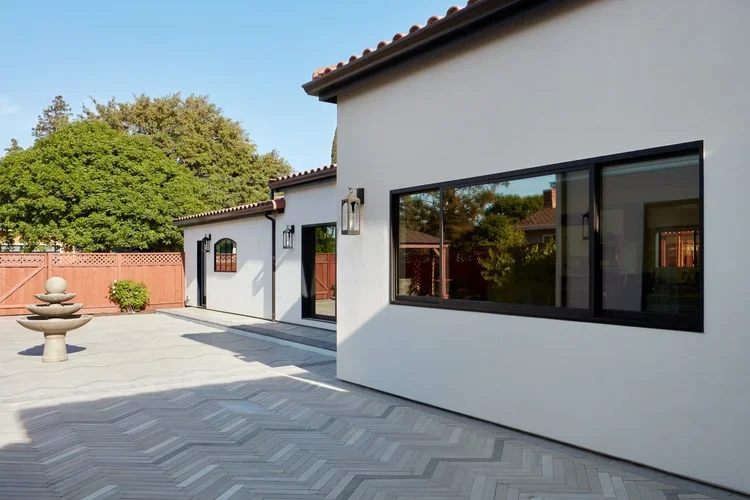
A well-planned addition or full-home remodel can change how your home works. Custom finishes are what make that change feel intentional rather than pieced together. The right cabinetry, flooring, hardware, tile, lighting, and trim create a home that fits your routines, reflects your priorities, and holds up to real family life.
For Bay Area homeowners making a significant investment, finishes should not be treated as a final decorating exercise. They need to be considered early, coordinated across the whole project, and selected with the architecture, budget, and construction schedule in mind.
Custom Finishes Start With How You Live
The best finish decisions begin with practical questions. How does your family enter the home? Which rooms carry the most traffic? Do you cook every night, host frequently, work from home, or need a quieter retreat from a busy household?
A family adding square footage may benefit from durable wide-plank flooring that continues from the existing home into the new space. A kitchen remodel may call for cabinetry with integrated storage, easy-clean countertops, and lighting that supports both meal prep and entertaining. In a primary suite, the priority may be a calmer material palette, better shower performance, and millwork that eliminates clutter.
This is where custom work earns its value. It is not simply choosing more expensive materials. It is making targeted decisions that improve function, proportion, and longevity.
Where Custom Finishes Have the Biggest Impact
Some selections influence the feel of a home more than others. Floors, cabinetry, countertops, tile, interior doors, and lighting are seen and used every day. They also establish the visual language of the project.
Cabinetry and Built-Ins
Custom or semi-custom cabinetry can solve layout problems that standard boxes cannot. A shallow pantry, window seat, mudroom drop zone, media wall, or office built-in can make underused space useful without making a room feel crowded.
The key is to design storage around the items you actually own and the way you use each room. Thoughtful drawer depths, appliance garages, concealed charging, and properly planned closets can have more daily impact than a purely decorative upgrade.
Flooring, Tile, and Stone
Hard-surface materials need to balance appearance with maintenance. Natural stone offers variation and character, but it may require sealing and can show etching in a high-use kitchen. Porcelain can provide a durable, lower-maintenance alternative with a broad range of looks. Engineered wood can bring warmth and stability, though product quality and installation details matter.
Continuity is often more valuable than excess variety. Repeating a flooring tone, metal finish, or stone family across connected spaces gives a remodel a composed, architectural feel.
Lighting and Hardware
Lighting is often underestimated until the project is nearly complete. Layered lighting - ambient, task, and accent - makes rooms more functional and changes how materials read throughout the day. Under-cabinet lighting, well-placed sconces, dimmers, and properly sized fixtures can make a kitchen, bath, or living area feel finished without overwhelming it.
Hardware follows the same principle. It should feel consistent with the home’s overall direction, but it does not need to be identical in every room. A controlled mix of finishes can add depth when it is planned, not improvised.
Avoid the Most Common Finish Selection Problems
The most expensive finish mistake is selecting materials in isolation. A countertop sample may look perfect under showroom lighting, then conflict with the flooring, paint, or cabinet color once it arrives on site. Samples should be reviewed together, in the actual home when possible, and under both natural and artificial light.
Another common issue is making finish selections too late. Long lead times for plumbing fixtures, tile, lighting, and specialty cabinetry can affect the construction sequence. Early decisions give the design and construction team time to coordinate dimensions, rough-ins, transitions, and installation requirements before they become costly field changes.
Budget also requires discipline. It makes sense to invest in highly visible, high-touch elements such as cabinetry, flooring, countertops, and plumbing fixtures. A less visible finish may be a smart place to simplify. The goal is not to select the most expensive option in every category. It is to direct the budget toward details that improve the home for years to come.
One Team Keeps the Details Connected
Custom finishes touch every stage of a major remodel, from early design through final installation. When design coordination, permitting, material planning, and construction are handled as one process, decisions can be made with a clearer understanding of cost, lead time, code requirements, and buildability.
At EDR Design Build, that integrated approach helps homeowners move from broad ideas to coordinated selections without managing separate designers, estimators, and contractors. The result is a more controlled process and a home where the details support the larger vision.
Choose finishes that make daily life easier, not just photos look better. When every material has a purpose and every detail belongs to the same plan, your home will feel considered from the first step inside.
Proudly serving San Jose, Campbell, Los Gatos, Saratoga, Cupertino, Sunnyvale, Santa Clara, Mountain View, Los Altos, Los Altos Hills, Palo Alto, Menlo Park, Stanford, Woodside, Emerald Hills, Atherton, South San Francisco, Redwood City, Foster City, Portola Valley, Belmont, San Mateo, Burlingame, Millbrae, Hillsborough, San Bruno, Daly City, Colma, Brisbane, Pacifica, Milpitas, San Carlos, and surrounding Bay Area communities.
