Every custom home builder in the Bay Area will tell you they build quality homes. The word "quality" is used so freely it's nearly lost all meaning. What actually separates a precision-built custom home from one that looks good at move-in but reveals its compromises over time? And how do you identify the difference before you've signed a contract?
This guide breaks down what genuine construction quality looks like — in the framing, the envelope, the mechanical systems, the finishes, and the management practices behind them — so you can evaluate any Bay Area builder with real criteria.
Framing Quality: Where Precision Starts
The structural frame of your home is the skeleton everything else depends on. Precision framing means:
• Walls are plumb, floors are level, and structural members are straight — verified with layout tools, not just eyeballed.
• Lumber is properly selected and graded for each application — not whatever arrived on the last delivery.
• Structural connections are made per engineering drawings, not approximated.
• Blocking is installed in every location where future finish work (cabinets, railings, grab bars, TV mounts) will need solid backing.
• Shear walls and hold-downs are installed exactly as engineered for seismic performance — no shortcuts.
When you visit a framed home in progress, look for floors that feel solid underfoot, walls without visible bowing or gaps, and clean, organized framing throughout. A contractor who frames sloppily often builds sloppily at every subsequent phase.
The Building Envelope: Where Energy and Comfort Are Won or Lost
The building envelope — the combination of insulation, air sealing, windows, and exterior cladding — determines how comfortable, quiet, and energy-efficient your home is. In the Bay Area's mild but variable climate, envelope quality has lasting consequences.
Precision envelope construction includes:
• Continuous air barrier: A true air barrier requires attention at every penetration — around windows, at plates, at roof-wall intersections. A leaky air barrier defeats even excellent insulation.
• Thermal bridging reduction: Where possible, framing should be designed to minimize thermal bridging — the direct connection between cold outdoor structure and warm interior. Continuous exterior insulation, advanced framing, and careful detailing all contribute.
• Window and door installation: High-performance windows deliver nothing if they're installed with gaps in the rough opening or improper flashing that allows water infiltration. The installation is as important as the window specification.
• Moisture management: California's exterior finish requirements — stucco, fiber cement, wood cladding — must be properly detailed with weather-resistive barriers and drainage planes to prevent wall assembly moisture damage.
Ask any builder candidate to walk you through their envelope detailing approach. Vague answers indicate this isn't a priority.
Mechanical System Quality: HVAC, Plumbing, and Electrical
The mechanical systems in your home — HVAC, plumbing, and electrical — determine daily comfort and long-term reliability. Precision installation means:
HVAC: Duct systems should be designed by a mechanical engineer, not improvised in the field. Ducts should be properly sized, well-insulated, and sealed at every joint. Air balancing after installation ensures consistent temperatures throughout the home. Ask whether your builder uses Manual J load calculations for HVAC sizing or just sizes equipment by square footage.
Plumbing: Hot water distribution should be designed for efficiency — either with a recirculation loop for large homes or point-of-use supplemental water heaters. All supply lines should be protected from thermal stress and seismic movement. Drain, waste, and vent systems should be installed with proper slope and clean-out access.
Electrical: A precision-wired home has a well-organized panel with clearly labeled circuits, proper wire sizing for all loads, and adequate capacity for future needs (EV charging, added circuits, future solar/battery). Conduit rather than direct-buried wiring for accessible runs makes future modifications practical.
Finish Quality: What You See and Touch Every Day
In a custom home, finish quality is ultimately what you live with every day. Precision finishes mean:
• Drywall: Properly floated joints with no visible seams under raking light. Level 4 or Level 5 finish (the highest drywall quality levels) in formal spaces and areas with direct light exposure.
• Paint: Multiple coats properly applied with no lap marks, roller texture, or thin spots. Crisp lines at color transitions.
• Trim and millwork: Mitered corners that close fully, no gaps at wall intersections, proper reveals maintained throughout.
• Tile: Consistent joint width maintained with spacers, grout lines level, no lippage (tile edges at different heights). Back-butter application to ensure full adhesive coverage prevents future cracking.
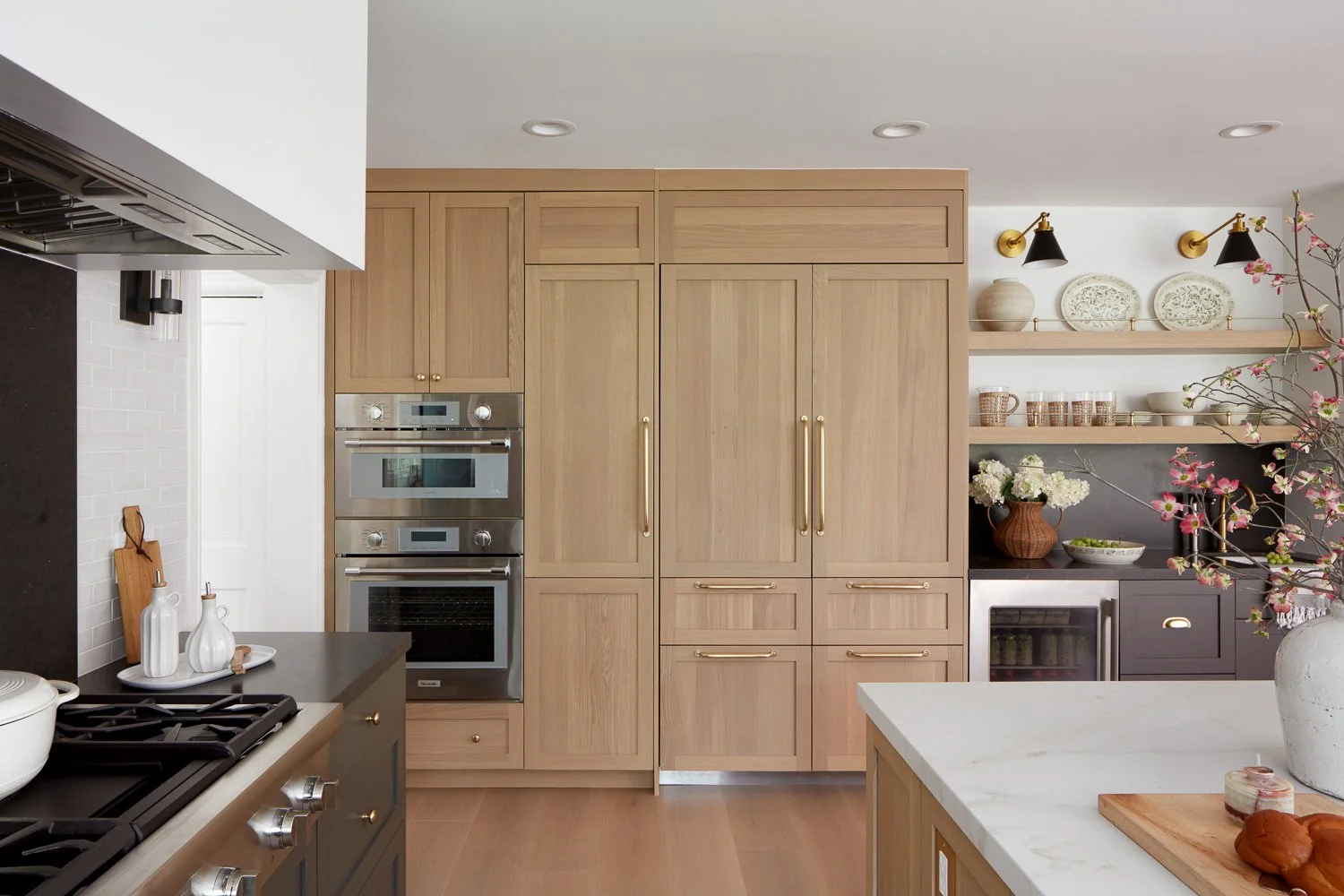
• Cabinetry: Doors and drawers that align, close silently, and operate smoothly. Consistent reveal between adjacent doors.
• Hardwood and engineered flooring: Properly acclimated before installation, nailed at correct spacing, no squeaks.
The easiest way to evaluate a builder's finish quality: visit a project they completed 3–5 years ago. Everything looks good when it's new. The quality of workmanship reveals itself over time.

Project Management as a Quality Driver
The management of a construction project directly impacts the quality of the outcome. Precision-built homes are the result of:
• Organized job sites: Clean, organized sites are safer and produce better work. When materials are protected, staging is logical, and waste is managed, workers can focus on quality.
• Proactive coordination: Trade sequencing in custom home construction is complex. Conflicts between structural, mechanical, and finish requirements should be resolved in planning — not discovered in the field.
• Regular quality inspections: Not just city inspections, but internal quality reviews at each phase. Framing is checked before drywall. Drywall is inspected before paint. Floors are protected through subsequent phases.
• Subcontractor accountability: The best builders have long-term relationships with trades who care about quality and know the builder's standards. Rotating subcontractors by price alone produces inconsistent results.
When interviewing a builder, ask specifically: "Who is the person responsible for quality control on my project, and how do they do that job?" The answer tells you whether quality is a system or just a talking point.
Proudly serving San Jose, Campbell, Los Gatos, Saratoga, Cupertino, Sunnyvale, Santa Clara, Mountain View, Los Altos, Los Altos Hills, Palo Alto, Menlo Park, Stanford, Woodside, Emerald Hills, Atherton, South San Francisco, Redwood City, Foster City, Portola Valley, Belmont, San Mateo, Burlingame, Millbrae, Hillsborough, San Bruno, Daly City, Colma, Brisbane, Pacifica, Milpitas, San Carlos, and surrounding Bay Area communities.