Bay Area homeowners building custom homes have more options for sustainable, high-performance construction than anywhere else in the country — and in California, they're working within the nation's most demanding energy and environmental building codes. Whether your motivation is environmental values, long-term operating cost savings, or simply building the most technically advanced home possible, sustainable construction deserves a serious place in your custom home planning process.
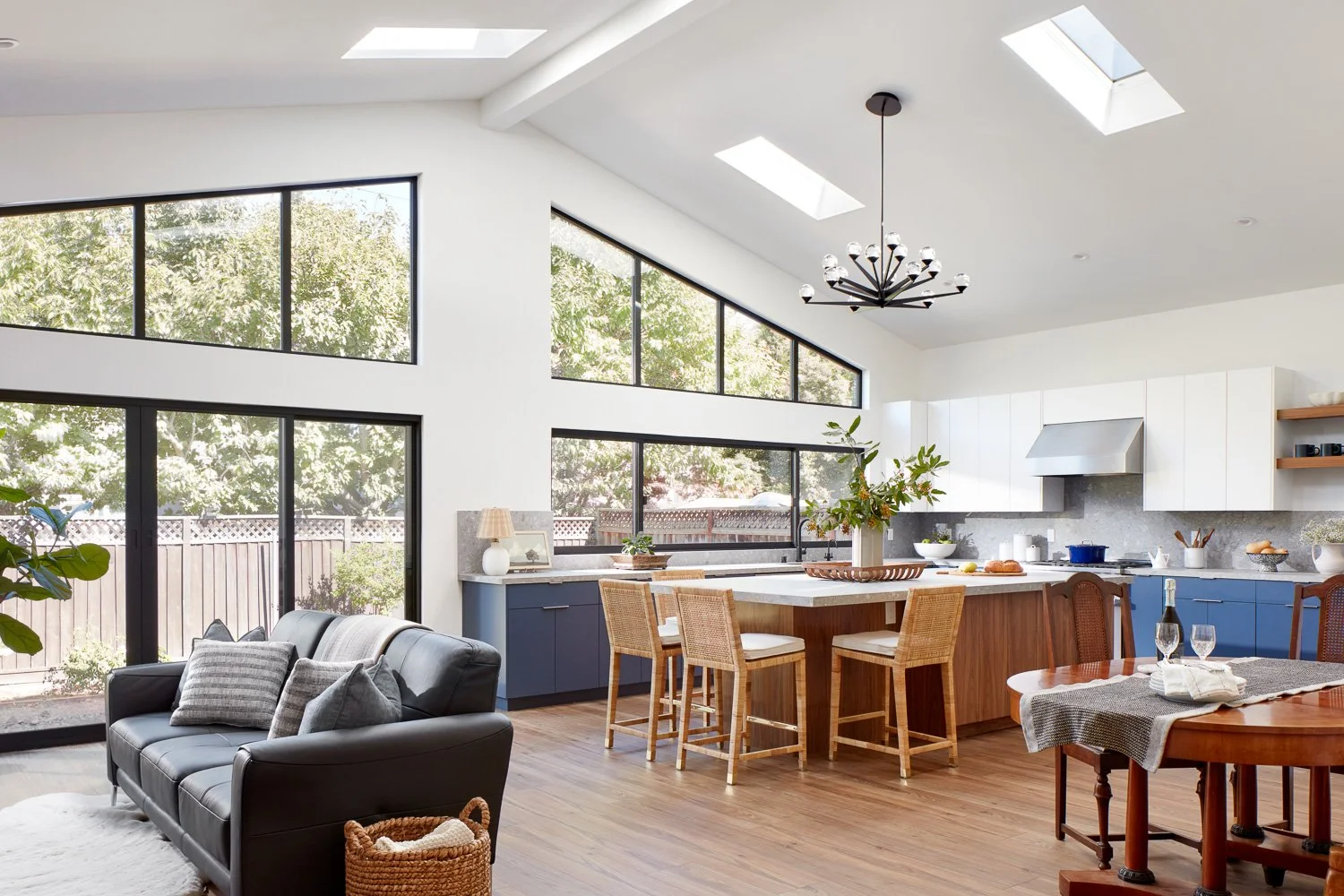
What California Already Requires: Title 24 and Beyond
California's Title 24, Part 6 is the state's energy code — and it's significantly more demanding than most other states' requirements. For new residential construction in the Bay Area, you're already required to meet standards that include:
• Mandatory solar photovoltaic systems for new single-family homes (since 2020)
• High-performance windows with specific U-value and SHGC requirements
• Continuous air barrier requirements
• Insulation minimums for walls, roofs, and floors• HVAC efficiency minimums and duct sealing requirements
• Indoor air quality ventilation requirements
This baseline is already more energy-efficient than most existing Bay Area homes. Custom home builders should use Title 24 compliance as a starting point — not a ceiling.
High-Performance Building Envelopes: Beyond Code Minimum
The most impactful sustainable investment in a custom home is a high-performance building envelope — the combination of insulation, air sealing, and glazing that determines how much energy your home needs to maintain comfort.
Above-code envelope options for Bay Area custom homes include:
Advanced framing (optimum value engineering): Reduces lumber use and thermal bridging while meeting structural requirements. Increases effective insulation value.
Continuous exterior insulation: Adding rigid insulation to the outside of framing nearly eliminates thermal bridging through framing members, significantly improving real-world envelope performance.
High-performance windows: European-style triple-pane or premium domestic double-pane windows with thermally broken frames dramatically reduce heat loss and condensation.
Blower door target: Code requires achieving a specific air leakage rate. High-performance builders target 25–50% better than code minimum, which translates to meaningful comfort and energy savings.
The payback on above-code envelope investment is realized in lower HVAC system capacity requirements — which reduces equipment cost and improves long-term reliability.
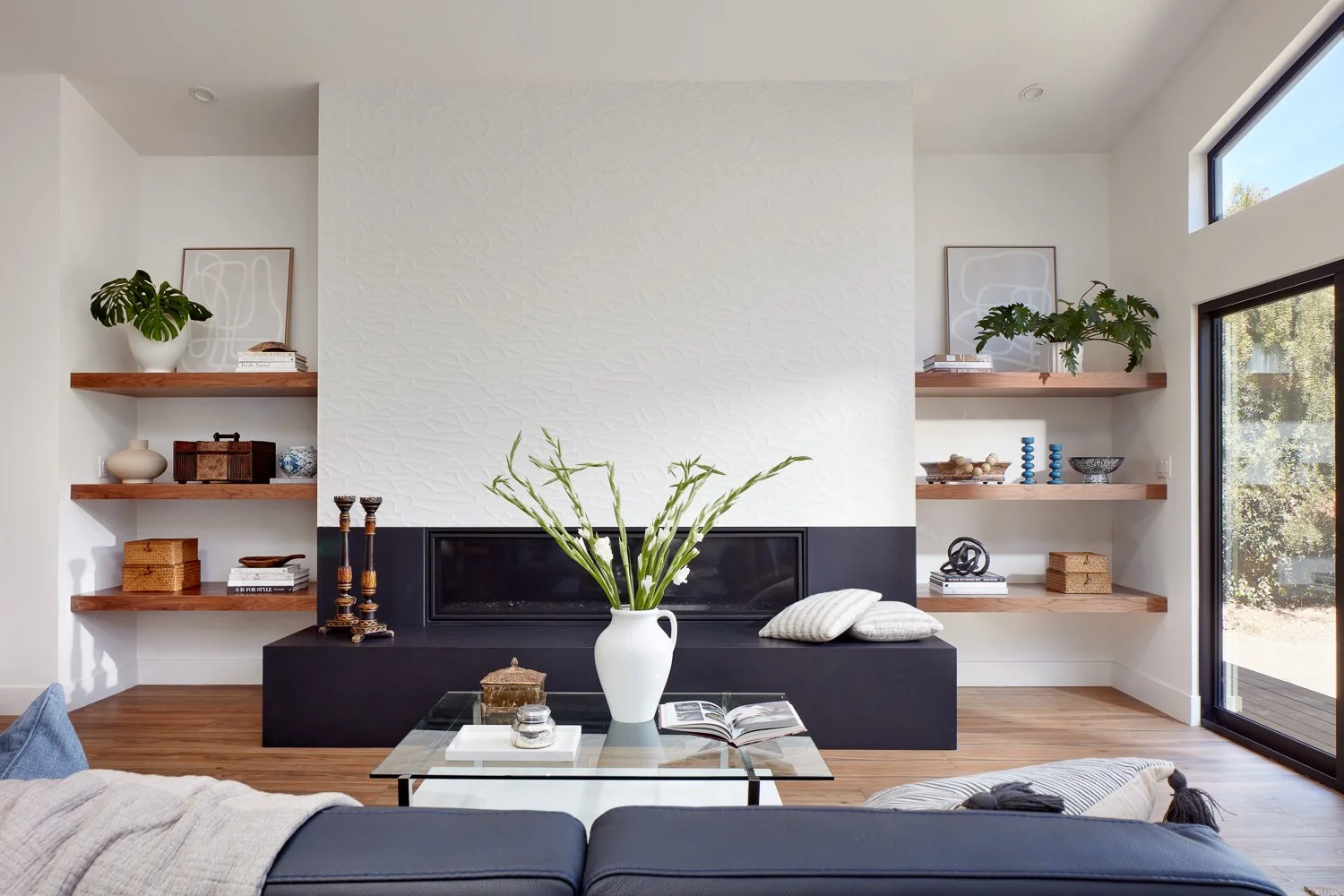
All-Electric Homes: The Bay Area Standard
New Bay Area custom homes are increasingly designed as all-electric — no natural gas connections. Several Bay Area cities (including Palo Alto, Mountain View, and others) have already adopted reach codes requiring or incentivizing all-electric new construction.
All-electric custom homes typically include:• Heat pump HVAC: Modern variable-refrigerant-flow (VRF) or ducted heat pump systems deliver efficient heating and cooling from a single system, with lower operating costs than gas forced-air in most Bay Area climate zones.
• Heat pump water heater: Dramatically more efficient than traditional tank water heaters. Heat pump water heaters use 60–70% less energy than gas equivalents.
• Induction cooktop: Performance equal to or better than gas with no combustion products in the kitchen air.
• EV charging: Level 2 charging circuits in the garage are standard in all-electric new construction.• Solar + battery storage: Pairs naturally with all-electric design, reducing utility dependence and providing backup power resilience.
Many Bay Area utility programs offer significant rebates for all-electric new construction. Ask your builder to run the full operating cost analysis for your specific project.
Sustainable Materials and Indoor Air Quality
Sustainable custom homes aren't just about energy — material choices affect both environmental impact and the indoor environment your family lives in.
Key considerations:
Low-VOC and no-VOC finishes: Paints, adhesives, sealants, and flooring products off-gas volatile organic compounds (VOCs) that affect indoor air quality for months to years. Specifying low-VOC materials throughout is a standard practice for health-conscious builders.
Formaldehyde-free composite wood: Cabinetry, subflooring, and structural panels can contain urea-formaldehyde binders. California CARB Phase 2 sets limits, but specifying formaldehyde-free products goes further.
Reclaimed and regional materials: Using reclaimed wood, locally sourced stone, and regionally manufactured products reduces embodied carbon and transportation impact.
Durable materials: The most sustainable building choice is often the most durable one. A standing-seam metal roof that lasts 60 years has significantly lower lifetime impact than an asphalt shingle roof replaced every 20 years.
Engineered lumber and mass timber: Reducing the use of old-growth dimensional lumber in favor of engineered products (LVL, LSL, I-joists) preserves forest resources while often delivering superior structural performance.
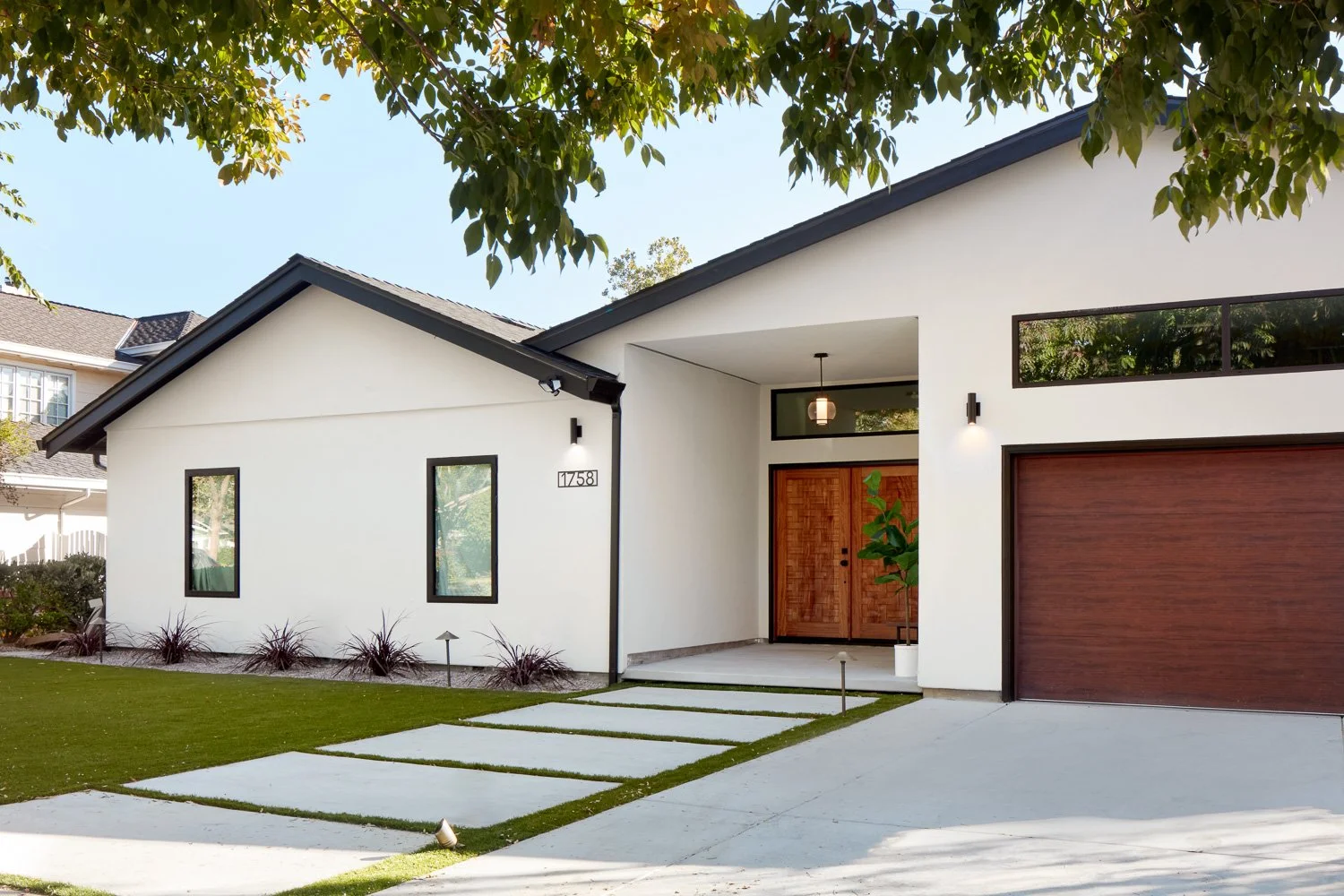
Green Certifications: Are They Worth Pursuing?
Several green building certification programs are available for Bay Area custom homes:
LEED for Homes: The most rigorous and internationally recognized residential green building certification. Requires documentation of energy, water, materials, and indoor environmental quality performance. Adds 5–15% to design fees and requires a third-party verifier.
Build It Green / Green
Point Rated: California-specific program with a well-established verification network. Less burdensome than LEED but still meaningful.
Passive House (PHIUS or PHI): The most demanding energy performance standard available. Passive House certified homes use 60–80% less energy than code-compliant homes. Requires detailed energy modeling and rigorous construction quality.
For most Bay Area custom home clients, formal certification is less important than actually building to high-performance standards — which don't require a certification to achieve. The best reason to pursue certification is if you plan to sell the home within 10 years and want documented, third-party verified performance for prospective buyers.
Proudly serving San Jose, Campbell, Los Gatos, Saratoga, Cupertino, Sunnyvale, Santa Clara, Mountain View, Los Altos, Los Altos Hills, Palo Alto, Menlo Park, Stanford, Woodside, Emerald Hills, Atherton, South San Francisco, Redwood City, Foster City, Portola Valley, Belmont, San Mateo, Burlingame, Millbrae, Hillsborough, San Bruno, Daly City, Colma, Brisbane, Pacifica, Milpitas, San Carlos, and surrounding Bay Area communities.