For Bay Area homeowners who want to add rental income, house a family member, or create a home office with full amenities — without building from scratch — a garage conversion ADU is often the fastest and most cost-effective option available. Your garage structure already exists. The foundation is poured. The walls are up. The roof is on. Converting that space into a legal, permitted ADU is far less expensive and faster to complete than a new detached build.
But garage conversions are not as simple as they look. Every Bay Area city has specific requirements for what makes a converted garage livable — and the technical work of adding insulation, HVAC, plumbing, egress windows, and kitchenette to a space built for cars (not people) requires careful planning and a contractor experienced in this specific project type.
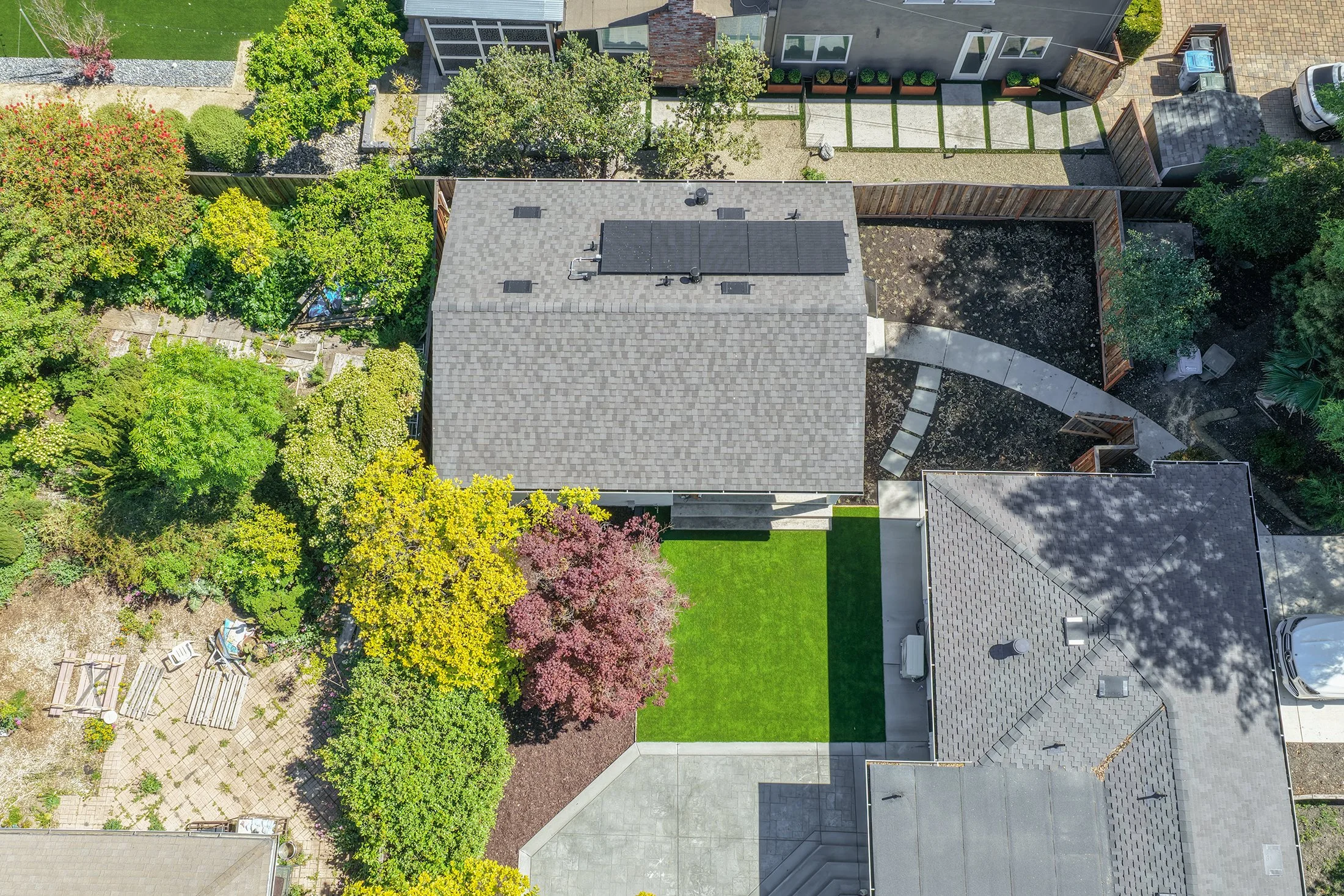
Is Your Garage a Good Candidate for ADU Conversion?
Not every garage converts efficiently or cost-effectively into an ADU. Before engaging a contractor, assess these factors:Ceiling height: California requires a minimum 7-foot finished ceiling height for habitable space. Most modern garages have 8–10 foot rough ceiling heights, which works well. Older garages with lower ceiling heights may require structural modifications to comply — which adds cost.
Slab condition: Your existing concrete slab becomes the ADU floor. If it's cracked, uneven, or has drainage slopes that are too steep, you'll need either slab repair/replacement or a raised floor system.
Wall condition: Garage walls are typically uninsulated wood stud or concrete block. Wood stud walls convert well; concrete block walls require a separate interior framing system to allow insulation and utilities.
Existing utilities: Is there any existing plumbing in the garage? Electrical service? The closer your existing garage utilities are to what an ADU needs, the lower the conversion cost.
Access and setbacks: California ADU law removed most setback barriers to ADU construction, but your city may have specific requirements for garage ADU access, parking replacement, and exterior modifications.
Parking replacement: California law generally does not require replacement of converted garage parking spaces — but confirm this with your specific city before assuming.
What a Garage Conversion ADU Includes
A complete garage-to-ADU conversion involves:Insulation: Garage walls and ceiling must be insulated to current California Title 24 energy code standards. This typically means spray foam, batt insulation, or a combination — plus attention to air sealing at all penetrations.
HVAC: Garages aren't heated or cooled. Your ADU needs a complete HVAC system — typically a ductless mini-split heat pump for a small ADU, which provides both heating and cooling efficiently without ductwork.
Plumbing: A full bathroom and kitchenette require cold and hot water supply lines and drain connections. If the garage slab is on grade, drain lines may need to be cut into the slab — a cost that surprises many homeowners.
Electrical: The garage's existing electrical service is typically inadequate for a living unit. A new sub-panel, proper circuit distribution, and GFCI/AFCI protection per current code are required.Egress windows: Bedrooms require egress windows of specific minimum dimensions for emergency exit. Garage windows are typically too small and must be replaced or supplemented.
Garage door replacement: The existing garage door opening becomes either a window wall, a glass door system, or enclosed with insulated framing and new exterior siding to match the house.
Kitchenette or full kitchen: Depending on unit type (JADU vs. full ADU), you'll add at minimum a kitchenette (sink, microwave, mini-fridge) or a full kitchen with range, refrigerator, and dishwasher.
Bathroom: A full bathroom with shower, toilet, and sink.Flooring: Over the concrete slab, you'll add either a floating floor system (LVP, engineered hardwood) or pour a self-leveling underlayment and tile.
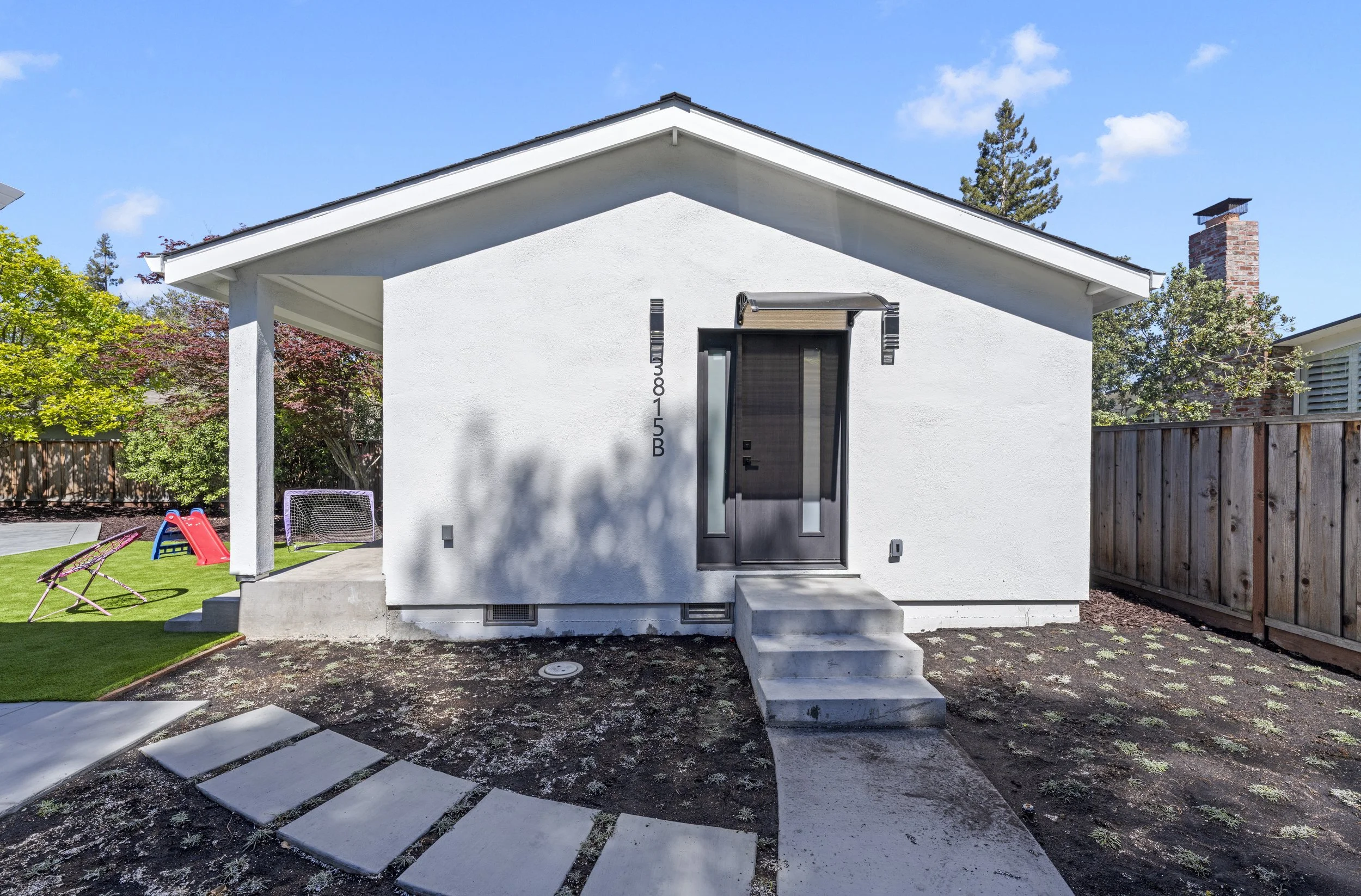
Garage Conversion ADU Cost in the Bay Area
Garage conversion ADUs are the most cost-effective ADU type in the Bay Area because the structure already exists. 2025 cost benchmarks:
Attached single-car garage (250–350 sq ft)
• Basic conversion: $95,000–$140,000• Mid-range: $140,000–$190,000
Attached two-car garage (450–600 sq ft)
• Basic conversion: $140,000–$200,000
• Mid-range: $200,000–$270,000• Premium finish: $270,000–$350,000
Detached garage conversion (any size)
• Add $20,000–$50,000 to above ranges for new utility connections
Key cost variables:
• Slab conditions (cutting for drains or raising the floor system)
• Plumbing — how far supply and drain connections are from existing lines
• Panel upgrade (often required)
• Finish level selections
• City permit fees (highly variable)
Garage conversions generally cost 30–50% less than a comparable detached ADU new build — which is why they're the most popular ADU type among Bay Area homeowners.
Garage Conversion ADU Permit Process
Garage conversion ADUs require a building permit in every Bay Area city. The good news: California's ADU laws (AB 68, AB 881, SB 13, and subsequent legislation) have significantly streamlined the process:
• Cities must approve or deny ADU applications within 60 days• Many cities now offer online ADU permitting
• Most Bay Area cities have pre-approved ADU design standards that simplify the review process• Garage conversion ADUs typically have simpler permit packages than detached new construction
Permit fees for garage conversions are generally lower than for new detached ADUs — often $5,000–$20,000 in most Bay Area cities, though Palo Alto and some others charge more.
One common issue: converting an attached garage to living space may trigger "change of occupancy" review, which can require upgrades to fire separation between the ADU and the main house. An experienced contractor will identify this requirement early and factor it into the project scope.
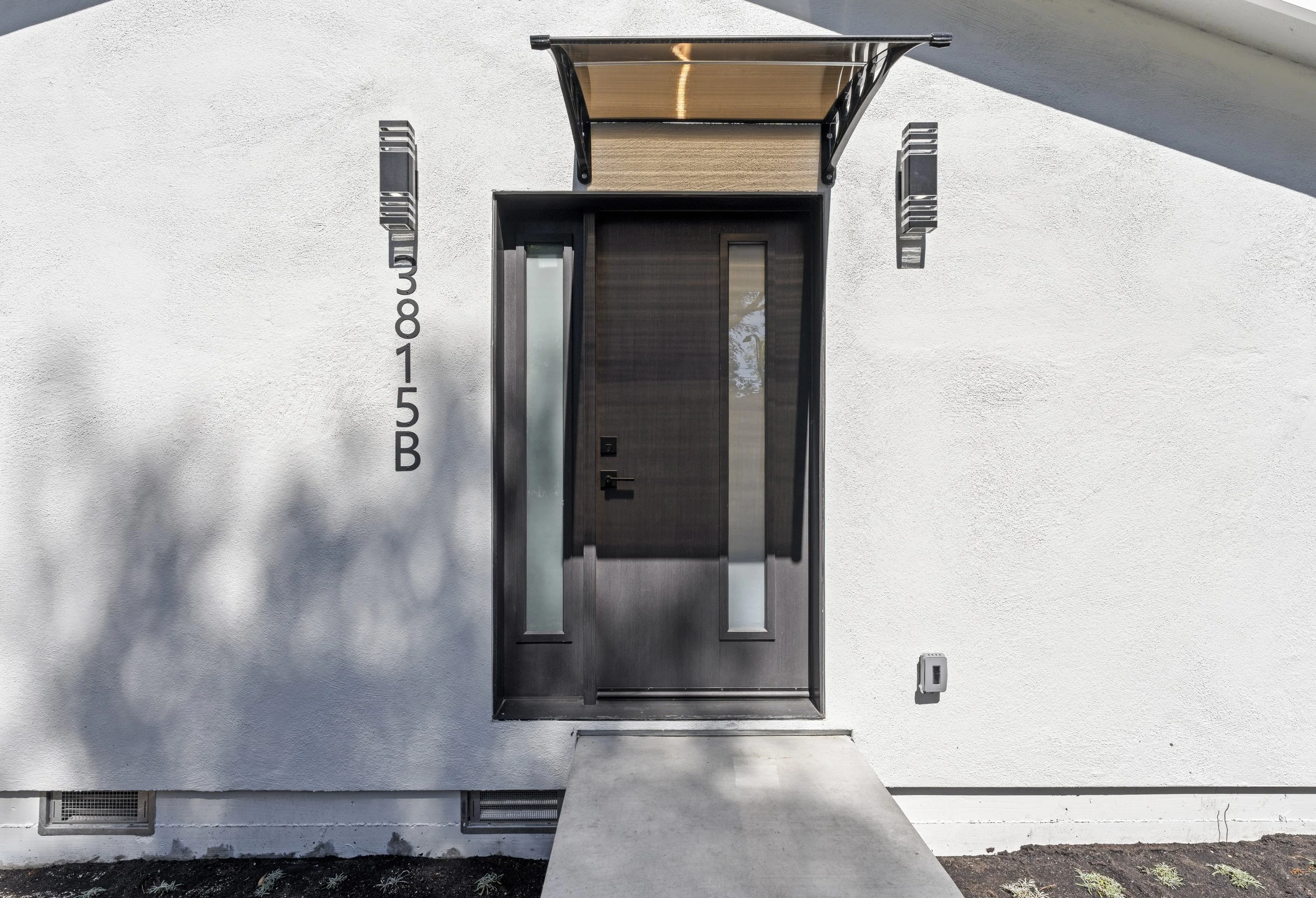
How Long Does a Garage Conversion ADU Take?
Realistic timelines for Bay Area garage conversion ADU projects:
Design and permit preparation: 6–10 weeks
Permit review and approval: 8–16 weeks (varies significantly by city)
Construction: 10–16 weeks
Final inspection and closeout: 2–3 weeks
Total timeline: 7–12 months from start to rent-ready
Garage conversions move faster than detached new construction primarily because there's no foundation work, less structural complexity, and a simpler permit package. For homeowners who want to minimize time to rental income, a garage conversion is consistently the fastest path to a legal Bay Area ADU.
Proudly serving San Jose, Campbell, Los Gatos, Saratoga, Cupertino, Sunnyvale, Santa Clara, Mountain View, Los Altos, Los Altos Hills, Palo Alto, Menlo Park, Stanford, Woodside, Emerald Hills, Atherton, South San Francisco, Redwood City, Foster City, Portola Valley, Belmont, San Mateo, Burlingame, Millbrae, Hillsborough, San Bruno, Daly City, Colma, Brisbane, Pacifica, Milpitas, San Carlos, and surrounding Bay Area communities.