You've outgrown your home. The kids need more space, your home office is the dining room table, and the thought of another winter with everyone crammed into 1,800 square feet is exhausting. You have two options: build an addition to your current home, or sell and buy something bigger.
In most markets, this is a close call. In the Bay Area, the math often tilts strongly toward adding on — but not always. Here's how to think through the decision honestly.
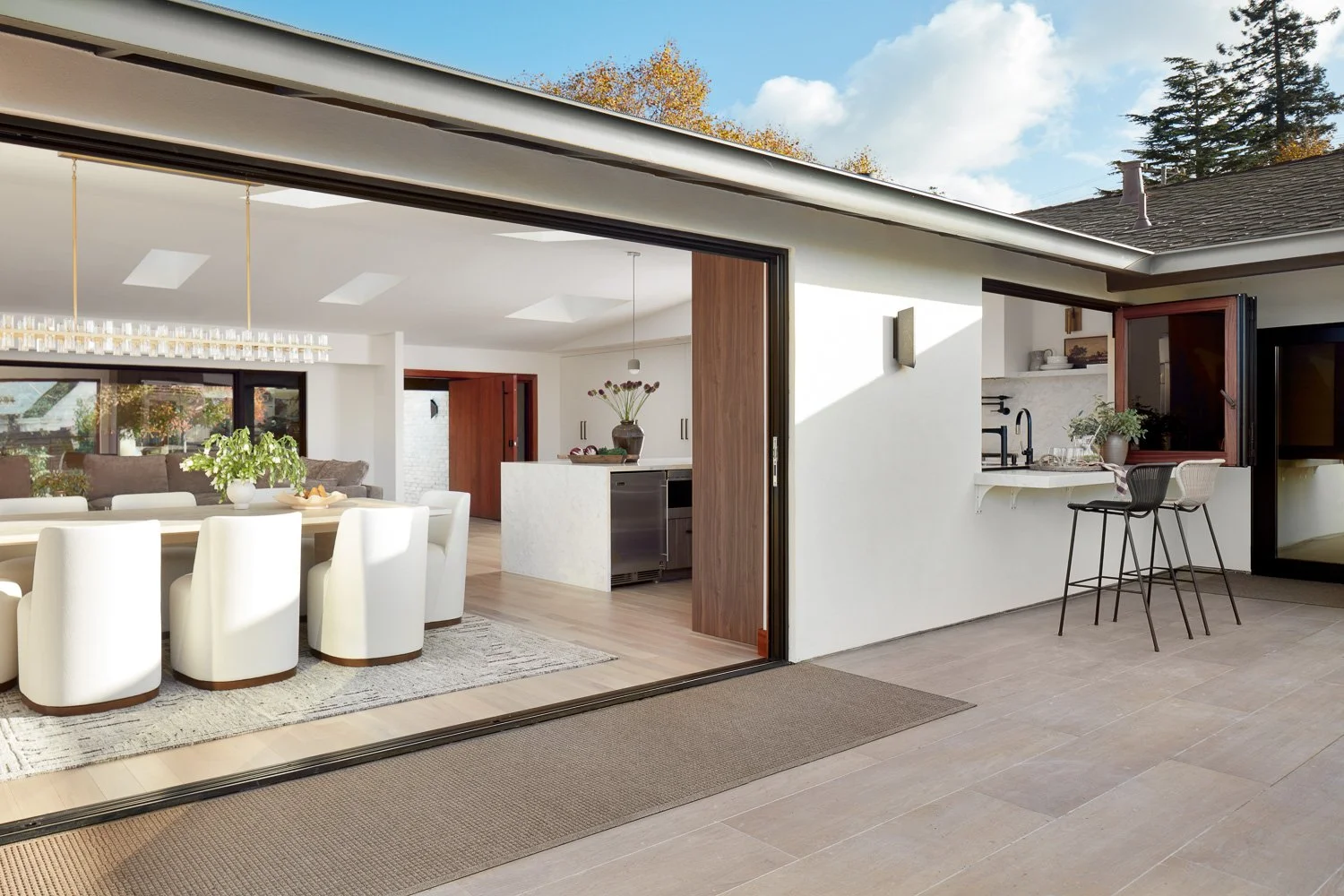
The True Cost of Moving in the Bay Area
Moving feels like a financial event — you sell your house and buy another. But the real costs are significant:
• Realtor commissions: Typically 5–6% of your sale price. On a $2 million home, that's $100,000–$120,000.
• Transfer taxes: Many Bay Area cities charge transfer taxes on both sides of the transaction.
• Mortgage costs: If you bought or refinanced at a low rate, you'll be giving up that rate and replacing it with today's current rate.
• Moving costs and temporary housing: $5,000–$25,000 depending on how long you're between homes.
• Upgrades to the new home: It's rare to move into a home that needs no work — budget $25,000–$100,000 for the inevitable renovations.
Total transaction friction in the Bay Area commonly reaches $200,000–$400,000 or more before you've bought a single inch of new square footage.
The True Cost of Adding On
A home addition eliminates transaction costs — you're investing directly into your existing property. You keep your mortgage rate, stay in your neighborhood, keep your kids in their schools, and build equity in the home you already own.
The cost of a Bay Area home addition varies by scope:
• Room addition (300–500 sq ft): $150,000–$300,000
• Second story (full new level): $400,000–$800,000+
• ADU (detached, new construction): $250,000–$500,000
These costs are real and significant — but they add directly to your home's value in a way that moving costs do not. A well-executed addition in Palo Alto, Menlo Park, or San Mateo typically returns 60–90 cents of value per dollar spent, depending on project type and local comparable sales.
When Adding On Makes More Sense
An addition is usually the better choice when:
• You love your location: Your kids are in great schools, you're close to work, and your neighbors are your community. The cost of re-establishing that elsewhere is incalculable.
• Your current mortgage rate is significantly below current rates: Moving means giving up your rate. In many cases, the ongoing monthly payment difference justifies staying.
• The specific square footage you need is modest: If you need one additional bedroom or a home office, a targeted room addition is far more cost-effective than buying an entirely different home.
• The housing inventory in your target area is limited: In many Bay Area cities, there simply aren't enough larger homes available at reasonable prices to make moving practical.
When Moving Might Make More Sense
Moving may be the better choice when:
• Your current home has fundamental limitations: If your lot is too small to build what you need, your foundation can't support a second story, or local zoning prevents meaningful expansion, your options are genuinely limited.
• You want to change your location significantly: If you're interested in a different neighborhood, school district, or commute profile, an addition won't solve that.
• The cost of the addition approaches or exceeds the price gap between homes: If you need $500,000 of additions and can buy exactly the right home for $400,000 more than your current home's value, the math may favor moving — though transaction costs often close that gap.
• Your current home has significant deferred maintenance: If the addition will require addressing foundation issues, outdated electrical, or other major repairs that wouldn't be needed in a newer home, factor those costs in.
How to Make the Decision
Here's a practical framework:
1. Get a detailed addition estimate from a qualified design-build contractor. Understand the full cost including design, permits, and construction.
2. Get a realistic sale price estimate from a realtor. Understand your true net proceeds after commission and transfer taxes.
3. Calculate the all-in cost of buying what you actually need in your target market — including your new mortgage payment.
4. Compare the two scenarios over 5 and 10 years, factoring in equity gain, carrying costs, and intangible quality-of-life factors.
For most Bay Area homeowners in established neighborhoods, this analysis favors adding on — but doing it with a contractor who delivers on schedule and on budget is critical to the outcome.
Proudly serving San Jose, Campbell, Los Gatos, Saratoga, Cupertino, Sunnyvale, Santa Clara, Mountain View, Los Altos, Los Altos Hills, Palo Alto, Menlo Park, Stanford, Woodside, Emerald Hills, Atherton, South San Francisco, Redwood City, Foster City, Portola Valley, Belmont, San Mateo, Burlingame, Millbrae, Hillsborough, San Bruno, Daly City, Colma, Brisbane, Pacifica, Milpitas, San Carlos, and surrounding Bay Area communities.