Home Addition vs. ADU: Which Is the Right Way to Expand Your Bay Area Property?
You need more space. The question is what kind. Should the new square footage be part of your home, a larger kitchen, a primary suite, extra bedrooms, or should it stand on its own as an accessory dwelling unit with its own entrance, kitchen, and address designation? Bay Area homeowners ask us this in nearly every feasibility meeting, and the right answer depends on how the space will be used, how your lot is zoned, and what your ten-year plan looks like.
Here is the honest comparison, cost, permitting, rental potential, and resale, from a design-build firm that builds both every day.
The Core Difference: Integrated Space vs. Independent Space
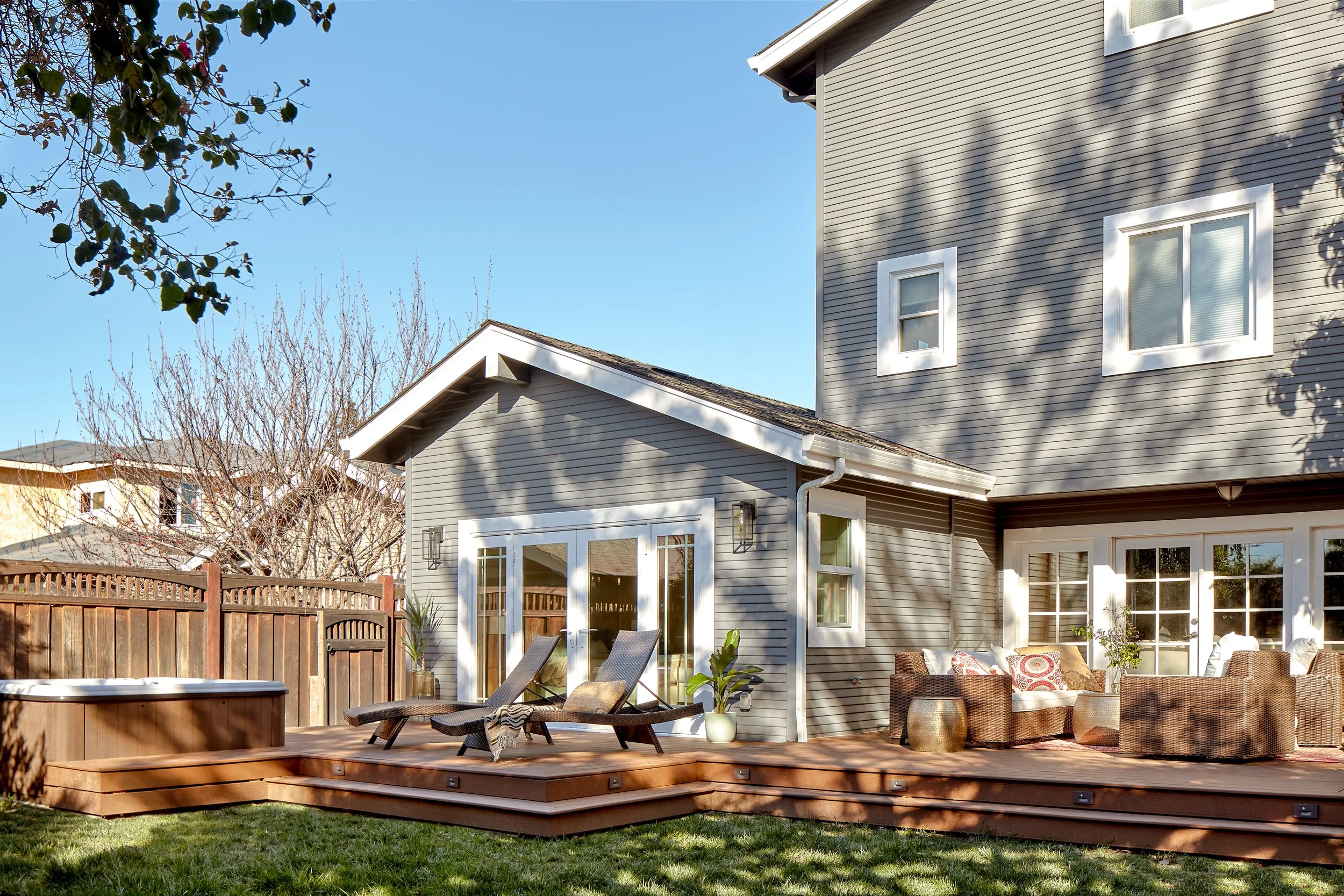
A home addition expands your living area as part of the main house: it shares your systems, your entrance, and your daily life. An ADU is a self-contained dwelling, legally distinct living space that can be rented, lent to family, or used as a private studio or office. That single distinction drives everything else.
Cost Comparison in 2026
Home additions: roughly $450 to $750 per square foot in Santa Clara and San Mateo Counties; second story work runs higher.
Detached ADUs: roughly $350,000 to $600,000+ all-in for a custom site-built unit, including site work and utilities.
Garage conversions: often the most affordable path to independent space, commonly $150,000 to $300,000.
Per square foot, the two paths are closer than most people expect. The real budget difference comes from utilities and site work (heavier on detached ADUs) versus structural integration (heavier on additions, especially second stories).
Permitting: ADUs Have a Legal Tailwind
California state law requires ministerial approval of qualifying ADUs, generally within 60 days, with reduced setbacks and no discretionary design review. Additions, by contrast, go through your city’s full zoning rules: floor area limits, setbacks, daylight planes, and in some cities design review. Practical consequence: if your lot is tight against FAR or setback limits, an ADU may be approvable where an addition is not. This is one of the first things we check in feasibility.
Rental Income and Flexibility
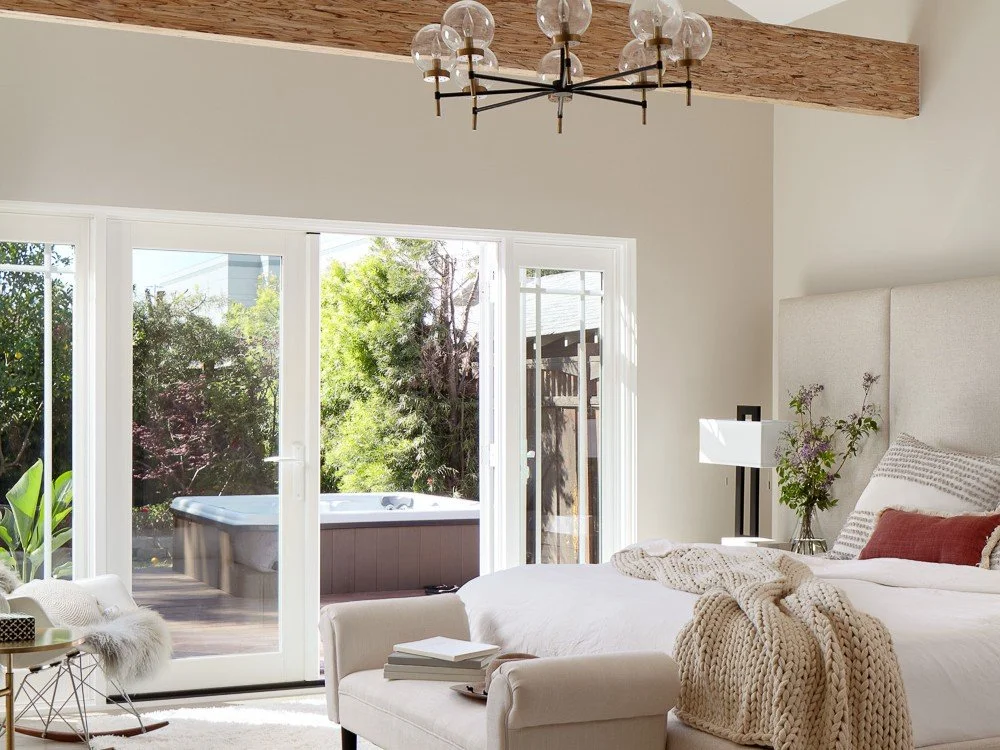
Only the ADU produces income. A one-bedroom ADU in much of the Bay Area rents from the low $2,000s to $4,000+ per month, and the unit can shift roles over time: rental today, in-law suite next year, home office or guest house after that. An addition cannot be rented separately, but it does something an ADU cannot: it makes your daily living space bigger and better.
Resale Value: Two Different Stories
Additions raise the core value of the home, more bedrooms, a true primary suite, and greater square footage are the most reliable value drivers in Bay Area listings.
ADUs add an income asset and appeal to multigenerational buyers, a fast-growing segment in Santa Clara County. Appraisal treatment has improved markedly as ADUs have become mainstream.
A Simple Decision Framework
Choose an addition if the space is for your household’s daily life: kitchen, bedrooms, primary suite, family room.
Choose an ADU if the space should be independent: rental income, housing for parents or adult children, or a separate work studio.
Consider both if your lot allows it, many of our clients phase an addition and an ADU under one master plan so utilities, permits, and design are coordinated once.
Frequently Asked Questions
Can an addition be converted to an ADU later?
Often yes, if it is designed with that future in mind: plumbing rough-ins for a kitchenette, a separate entrance, and sound separation. Tell your design-build team about the long-term plan and they will build the option in cheaply now rather than expensively later.
Which is faster to build?
ADUs usually win on permitting speed thanks to state law; construction durations are similar. A garage conversion is typically the fastest path of all to new usable space.
Does either trigger reassessment of my whole property?
No. In California, only the value of the new construction is added to your assessment; your existing home keeps its current basis.
Get a Side-by-Side Feasibility Comparison
The smartest first step is a feasibility study that models both options on your actual lot: buildable area, utilities, budget ranges, and approval paths. As a Bay Area design-build firm building additions, ADUs, and in-law suites across the Peninsula and South Bay, we will give you the numbers, and a recommendation. Contact us to schedule a consultation.
Proudly serving San Jose, Campbell, Los Gatos, Saratoga, Cupertino, Sunnyvale, Santa Clara, Mountain View, Los Altos, Los Altos Hills, Palo Alto, Menlo Park, Stanford, Woodside, Emerald Hills, Atherton, South San Francisco, Redwood City, Foster City, Portola Valley, Belmont, San Mateo, Burlingame, Millbrae, Hillsborough, San Bruno, Daly City, Colma, Brisbane, Pacifica, Milpitas, San Carlos, and surrounding Bay Area communities.